
From 9 to 20 November 2026, world leaders gather in Türkiye for COP31, and the summit has chosen a tulip as its emblem. It is a fitting choice. Few flowers carry as much cultural weight: the tulip shaped Ottoman art and gave its name to an entire era, the Lâle Devri, before setting off a speculative frenzy in seventeenth-century Holland. Today it underpins a horticultural trade worth over a billion euros a year.

Yet behind the cultivated blooms on the logo lies a quieter story. Most of the world’s roughly 90 to 100 wild tulip species grow in the mountains, steppes and semi-deserts of Central Asia, Anatolia and the Mediterranean. Many are already in decline. The latest Red List assessments of Central Asian wild tulips have shown that more than 50% are threatened with extinction, while species from other regions that have been assessed are also clearly struggling. A growing body of research now shows that climate change, the very issue COP31 is convened to tackle, is in many cases pushing them closer to the edge. If the tulip is to be the face of this year’s negotiations, it is worth asking what the negotiations mean for the tulip.
A life lived by the calendar
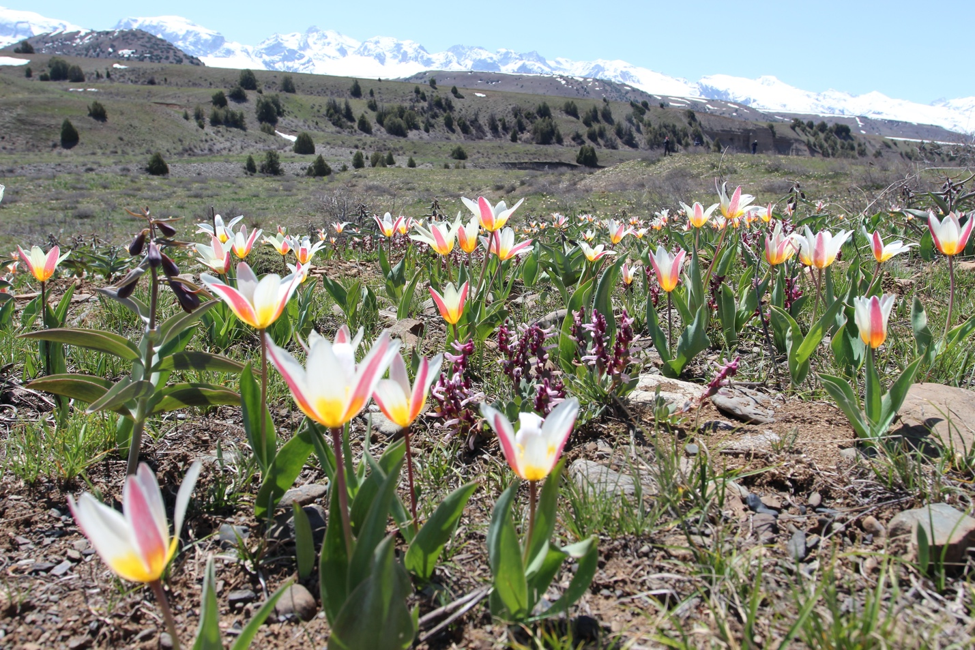
Wild tulips are geophytes. They spend most of the year underground as a bulb, then race through a short spring window to grow, flower and set seed before the summer drought arrives. That strategy has served them well for millions of years, but it ties them tightly to seasonal conditions.
The first condition is cold. Tulip bulbs and seeds need a period of winter chill, known as vernalisation, before they will grow. Experiments on the Critically Endangered Cyprus tulip, Tulipa cypria, show how unforgiving this is: seeds held at 5 °C germinated almost completely, while none germinated when temperatures were held at 20 °C. Cypriot winters will never reach 20 °C, but mean December and January temperatures are climbing, and even modest warming is likely to reduce germination.1 Warmer winters do not just stress today’s tulips; they can stop the next generation from starting at all.

The second condition is water availability, and here tulips walk a narrow line. Across species, our modelling and others’ repeatedly identify winter and seasonal rainfall as the strongest predictors of where tulips can live.2,3 Spring rain is especially important: it lets plants grow, flower and store energy in the bulb for the following year. Too little, and drought cuts the growing season short or kills seedlings. Too much, especially in the wrong season, and bulbs that need dry, free-draining soils sit waterlogged and rot. Central Asia’s lowland steppes and semi-deserts are forecast to become more arid, while shifting storm patterns may bring heavier, less predictable downpours elsewhere.
Wetter, warmer soils also open the door to disease. Fungal rots and other pathogens thrive where bulbs stay damp, and researchers in Uzbekistan have already recorded microbial invasion in wild populations of T. affinis.4 As climates shift, pathogens and pests can reach populations that have never encountered them.
Losing ground, and unable to follow it
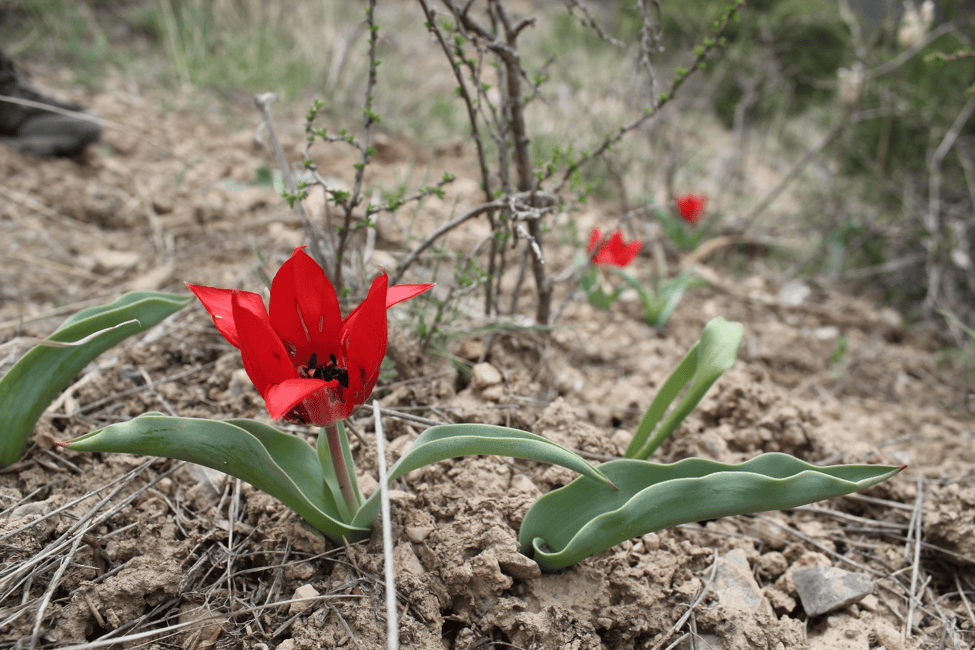
In 2021, we published the first regional climate modelling for wild tulips, combining 330 existing records with 85 new ones collected in the field across Kyrgyzstan. We modelled ten Central Asian species, and the message was stark: every species we projected lost suitable habitat within its native range. Even the most resilient, Tulipa bifloriformis, kept only around 40% of its high-quality habitat by 2050. For the steppe and semi-desert species, including Tulipa korolkowii and Tulipa kolpakowskiana, highly suitable native habitat disappeared entirely, even under a best-case emissions scenario.2
Studies since have extended this picture. Work in Uzbekistan projects that Tulipa lehmanniana of the Kyzylkum desert will be the biggest loser among its neighbours, and that Tulipa tubergeniana of the Pamir-Alay could lose around 95% of its suitable habitat within 80 years.4,5 Not every species declines in every model; some, such as Tulipa fosteriana, may gain ground.6 But the models differ in their details, which is itself a warning: we need field monitoring, not just projections, to know what is really happening.
Perhaps the most worrying finding is not just how much habitat disappears, but what happens to what remains. As the climate warms, the habitat that survives is squeezed into a narrower band of altitude and, for many species, pushed to higher elevations, in some cases by more than 1,000 metres. For some, it shifts to mountains hundreds of kilometres from their current range. Tulips are poor travellers and slow to reproduce. Their seeds fall close to the parent, and a new plant can take five to seven years to flower. Unlike animals, a tulip cannot simply relocate to the Pamirs or other mountain ranges and populating an area can take many years. Many will simply fail to track their climatic niche, leaving them stranded in places that no longer suit them.
Wherever their habitat ends up, few tulips will find protection there. In our 2021 study, seven of the species we modelled were projected to have less than 1% of their suitable native habitat inside protected areas by 2050.2 A parallel study found that projected habitat for T. korolkowii and T. lehmanniana overlapped with protected areas by less than 1%.5 This is a call to action: as countries work towards Target 3 of the Kunming-Montreal Global Biodiversity Framework, to protect 30% of land and sea by 2030, new protected areas must be planned to capture underrepresented species like tulips, along with the ground they will need in the future.
Climate is not acting alone
Climate change acts on populations already under pressure from overgrazing, ploughing, urban expansion, mining, linear infrastructure construction and the picking of flowers and collection of bulbs. These threats compound one another. A population weakened by grazing has less capacity to recover from a bad winter; a fragmented landscape leaves nowhere to retreat to; and reduced populations from collection or land-use change leaves less genetic diversity for adaptation to new conditions.
Cyprus shows how fast this can unravel for a species. Between 2015 and 2023 the island’s endemic tulip fell from about 6,265 plants to about 2,820, more than halving in eight years. Populations in cereal fields lost 90 to 100% of their plants to deep ploughing and early harvests, and the largest population vanished beneath a new dam’s catchment. Today around three-quarters of the surviving plants grow in just two protected sites.1 Given this rate of decline and the continuing threats, our latest Red List assessment upgrades T. cypria from Endangered to Critically Endangered, leaving it highly exposed to a warming climate. Cyprus is not an isolated case. In Uzbekistan, urban development wiped out 10 of 26 known populations of T. tubergeniana in a single district in four years, leaving fewer to survive a changing climate.4
These declines are not distant projections. They are losses already on the ground, and a warming and more unstable climate will make each one harder to reverse.
Protecting tulips where they grow, and beyond
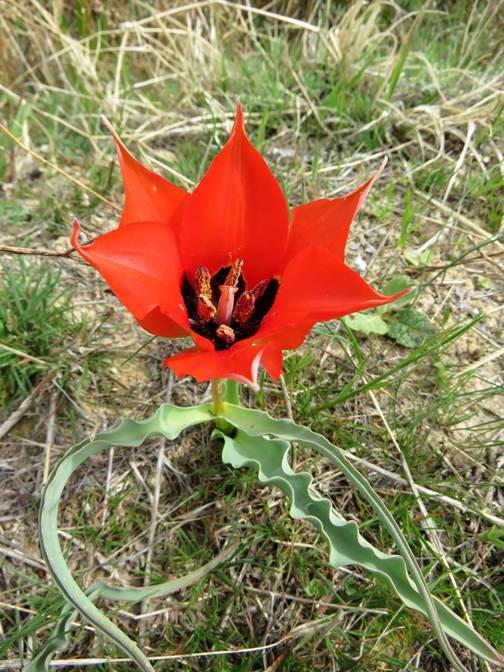
The first line of defence is in situ conservation: keeping wild populations healthy in their natural landscapes. That means connecting protected areas so they capture the habitat tulips need now and the higher ground they will need later. It means working with herders and farmers on grazing and ploughing practices, enforcing protections against bulb collection, and monitoring populations year on year so declines are caught early. Cyprus offers a case study of what works: a fenced micro-reserve has held its population steady while unprotected fields emptied.1 Yet there is no single fix: each species needs measures targeted at the threats it is most exposed to, and what works for one may not work for another.
In situ protection alone will not be enough for every species. Where habitat is projected to vanish, or to shift beyond a species’ reach, ex situ conservation becomes an insurance policy. Seed banks, living collections in botanic gardens and propagation techniques such as tissue culture can safeguard genetic diversity and provide plants for future reintroduction. For the most exposed species, carefully planned translocation into newly suitable, protected sites may eventually be needed, though this must be approached with caution and good science. Building a network of botanic gardens with more comprehensive collections of seeds, bulbs and living plants will be crucial, especially if wild populations need reinforcing.
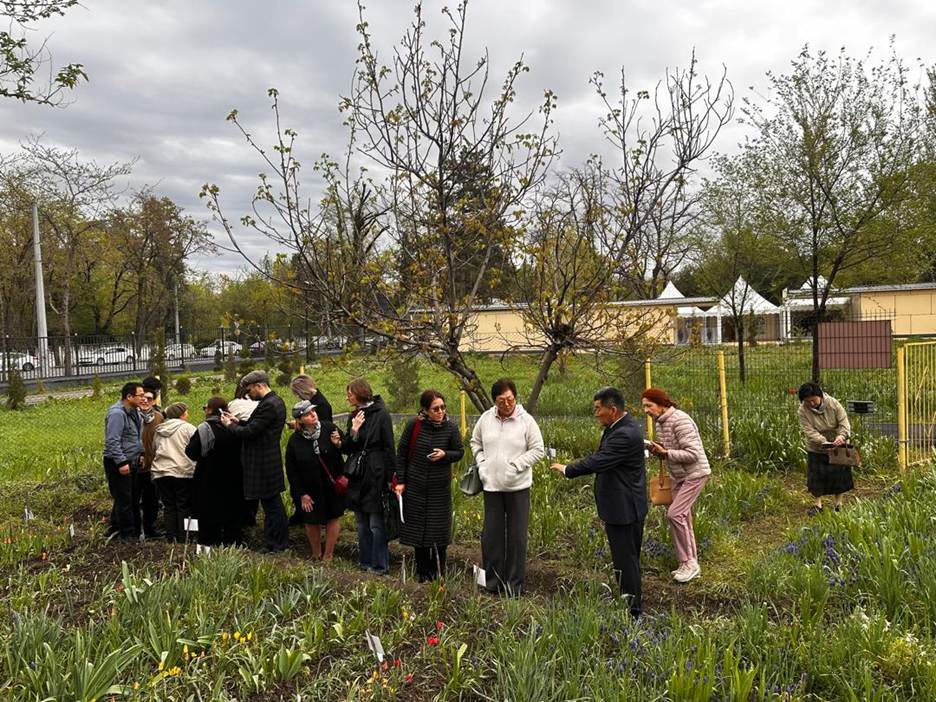
None of this can be done by one country alone. Most tulips cross national borders, and the places they will need in future are often in a neighbouring state. National Red List assessments, conservation planning and species action plans remain vital, because action usually happens at the national level, through the policies and laws that put conservation into practice. But a species can be listed as Critically Endangered in one country and overlooked entirely in the next, so regional cooperation will be essential to tackle the threats tulips face. Climate change makes this more urgent still: as suitable habitat shifts, it will not stop at national borders.
That is why the IUCN SSC Wild Tulip Specialist Group sits at the heart of this work. By bringing together researchers, botanic gardens, national authorities and local experts across the tulip’s range, the group is producing global Red List assessments, sharing occurrence data, coordinating field surveys, supporting local initiatives, and linking in situ and ex situ efforts so that they reinforce each other rather than working in isolation.
More than a logo
As delegates walk beneath the COP31 tulip, they will be looking at a flower whose wild ancestors are running out of winters cold enough to wake them, rains reliable enough to sustain them, and suitable habitat areas within reach. Every tenth of a degree negotiated in Türkiye will be felt in the soils of the Tien Shan, the Pamir-Alay, the fields of Cyprus and beyond. The tulip has been a symbol of beauty, wealth and power for centuries. This year it can become a symbol of something more urgent: proof that what we decide at the climate table decides what survives on the mountainsides and steppes where wild tulips grow. Let the emblem of COP31 not become a memorial to what we failed to protect.
References
- Riaz, A., Özden, Ö., Hodgson, D., Ekendal, T., Uluçam, H. & Gücel, S. (2026). Climate change and agricultural intensification are threatening the Endangered Tulipa cypria Stapf ex Turrill. Journal for Nature Conservation 89: 127078. https://doi.org/10.1016/j.jnc.2025.127078
- Wilson, B., Dolotbakov, A., Burgess, B.J., Clubbe, C., Lazkov, G., Shalpykov, K., Ganybaeva, M., Sultangaziev, O. & Brockington, S.F. (2021). Central Asian wild tulip conservation requires a regional approach, especially in the face of climate change. Biodiversity and Conservation 30: 1705–1730. https://doi.org/10.1007/s10531-021-02165-z
- Qin, D., Liu, W., Tian, J. & Ju, X. (2024). Potentially suitable area and change trends of Tulipa iliensis under climate change. Phyton 93(5). https://doi.org/10.32604/phyton.2024.049668
- Dekhkonov, D., Asatulloev, T., Tojiboeva, U., Sari, I., Abdupattaeva, S., Abdullayev, S., Sun, W., Yusupov, Z. & Tojibaev, K.Sh. (2025). Beauty demands sacrifices: is it possible to overcome both climate change and anthropogenic impact for Pamir-Alay tulips (Liliaceae)? Journal of Asia-Pacific Biodiversity 18: 47–56. https://doi.org/10.1016/j.japb.2024.05.005
- Dekhkonov, D., Asatulloev, T., Tojiboeva, U., Sari, I. & Tojibaev, K.Sh. (2023). Suitable habitat prediction with a huge set of variables on some Central Asian tulips. Journal of Asia-Pacific Biodiversity 16: 75–82. https://doi.org/10.1016/j.japb.2022.10.007
- Shukrullozoda, R., Turabekov, S., Umurzakova, Z., Bazarov, B., Toshnazarova, N., Normurodova, M., Xolbekov, B., Narzullaev, M. & Namazova, D. (2025). Bioclimatic modeling of Tulipa fosteriana and Tulipa ingens: predicting the effects of climate change on the distribution of endangered wild tulips. Plant Science Today 12(2): 1–13. https://doi.org/10.14719/pst.9007


