Introduction
Pack your bags, we are heading to Central Asia… Spring 2025 provided an opportunity for some of the IUCN SSC Wild Tulip Specialist Group (WTSG) to travel to the wilds of Kyrgyzstan. This visit, although it was of course tulip related, had the primary purpose of outreach through participation in events, capturing video footage, and taking photographs rather than scientific research.
The trip started with the wonderful fourth annual Tulip Festival held at Gareev Botanical Garden in Bishkek. A day to celebrate the late Professor Kaiyrkul Shalpykov, who founded and previously ran the festival, as well as to raise the profile of wild tulips to a broader audience. WTSG members spoke at the event opening ceremony, showcased the tulip collection of the garden, and presented a range of work from the last five years at a mini conference. Irina Popoev, a WTSG member and manager of the tulip collections of the garden, had a particularly busy day showing the public around her incredible wild tulip collection as well as her cultivated tulips. All in all, the day was a great success and many of the attendees enjoyed a glimpse of the wild tulip research life as well as seeing some of these amazing species’ flowering in the extremely valuable ex-situ collection managed at the garden.

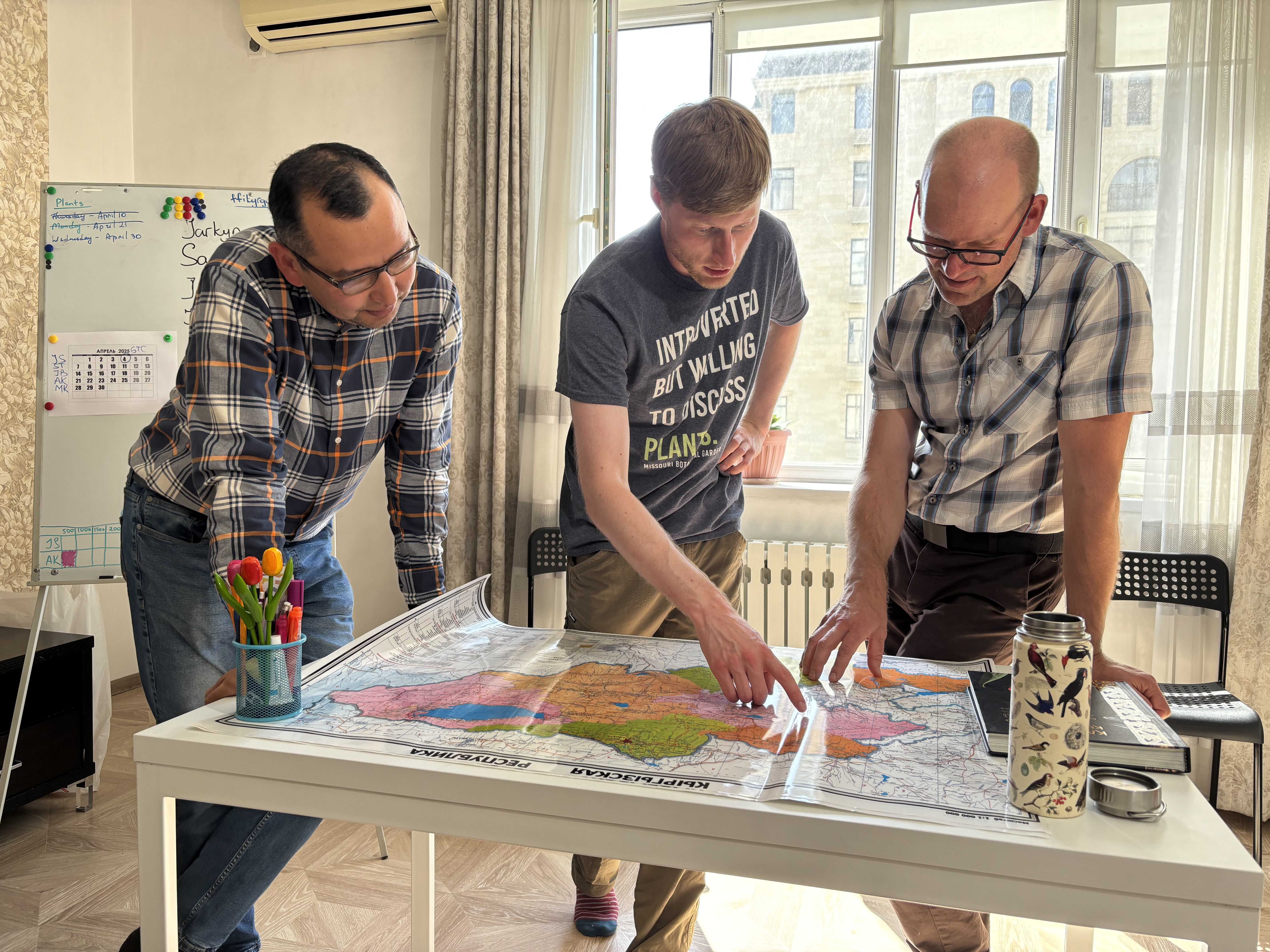
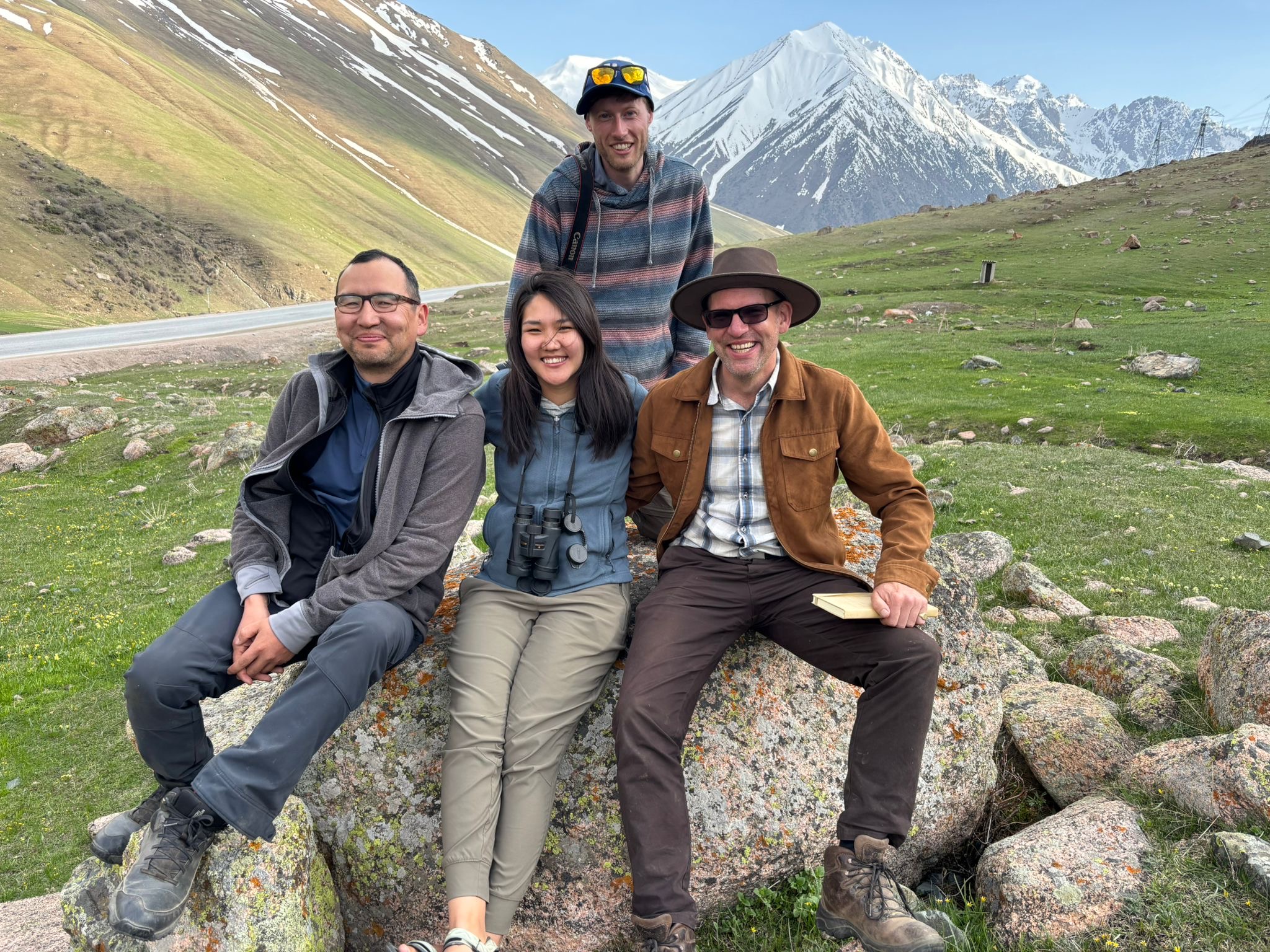

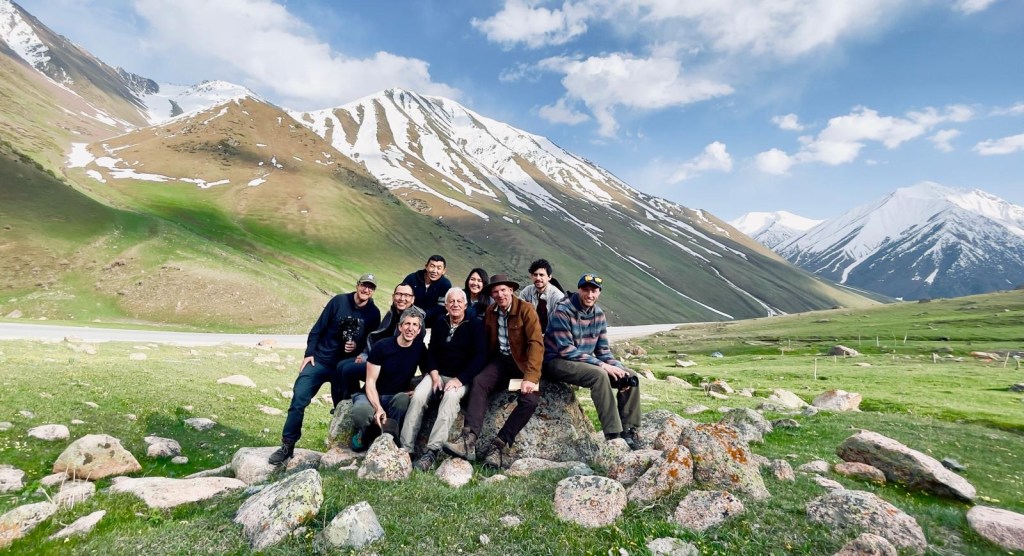
However, the centre piece of this trip was an expedition to visit the remote western areas of Kyrgyzstan in search of truly wild tulips. The two co-chairs of the specialist group, Brett and Ormon had been in contact with a European TV channel, ARTE, over the last six months organising an expedition which was to be filmed for a documentary. Maarten and Kali had both kindly agreed to bring their expertise on the expedition and so it was on the evening of the 23rd of April that the team awaited the arrival of the camera crew (Thierry Ragobert – Film Director, Guillaume Bression – Director of photography, and Martin Ragobert – Assistent camera) and a professional photographer (Albert Dros) and the delights of the open road and the camera lens that would follow. This blog highlights the personal experiences of WTSG members Maarten, Brett, and Kali as they travel to find some of these incredible flowers in the mountains, steppe, and semi-deserts of Central Asia.
Maarten
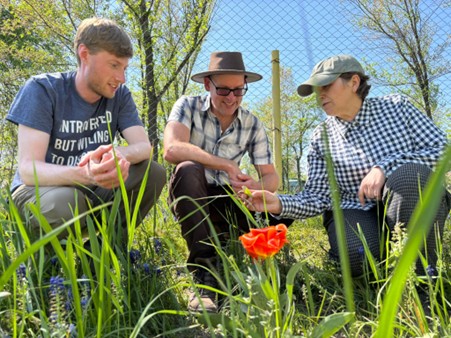
Late spring is always my favourite time of the year. As a botanist it is a busy time, because all my favourite plants are flowering, including tulips, and thus it requires me to be in many places in a short space of time. After a quick visit to the Netherlands to see the tulip fields and discuss the history of tulip cultivation with my colleagues there, I was off to Central Asia to see tulips from their area of origin. I joined Brett in Istanbul, and we travelled to Bishkek together where Ormon very kindly pick us up from the airport. He was very patient with our jetlagged selves, and he was very generous to let us stay in his lovely house on the outskirts of Bishkek. To get some fresh air we went for a short walk in the neighbourhood, and Brett and I spotted some Tulipa ostrowskiana, showing off its bright red flowers just beside the road, contrasting with the greenish yellow Gagea and the sky-blue tartar lily (Ixiolirion tataricum). It was a great start of our trip!
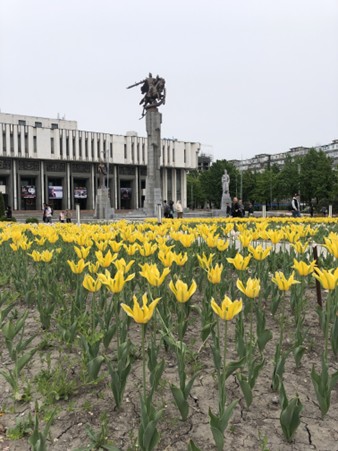
During this stay we visited the Gareev Botanical Garden where the fourth annual tulip festival was in full swing and where I saw some old cultivars from Soviet times, which I had never seen before, and the collection of wild tulips in their enclosure spreading their petals in the lovely spring sunshine, many of which we would see in the wild later in the week. I also spent a few days exploring Bishkek and doing some ‘scouting’ for the film crew. I walked around to see where the best sites to film tulips in town would be. Although it had been very warm, so some of the earlier tulips had already finished flowering, I found some good patches of late tulips in and around the grounds of the Philharmonic Building, Oak Park, and the White House. Many selfies were taken with the colourful displays!

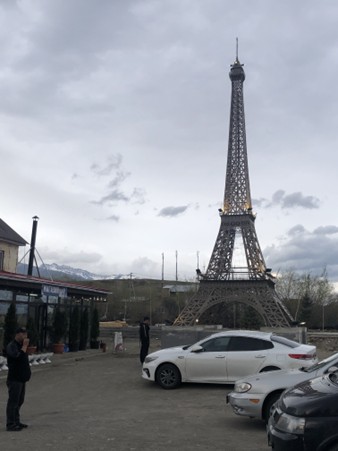
The following day we left for the mountains. The landscapes we encountered were stunning, with vast flower meadows and a backdrop of snow-capped mountains. On the first day on a very steep slope we found Tulipa zenaidae in both yellow and red forms, a nice surprise! A little later we stopped at a gas station behind which Brett and Ormon had previously found a population of Tulipa tetraphylla, and these were also in full flower. What a treat! Nearby we had lunch in a nameless hamlet that the locals call Paris. A popular place for truckdrivers to stop, the restaurants and shop are lit up at night and thus the hamlet was called Paris after the city of light in France. They even have a model Eiffel Tower!
From there we zigzagged across the mountains, up high passes and through small villages where some roadside stands were selling local mountain honey and kurut, a salty snack made of dried yoghurt. The mountain slopes were a carpet of wildflowers including Tulipa dasystemon, and large numbers of beehives could be spotted in places. The poppies were already starting to open and the wonderful tall spikes of Eremurus were just showing their first flowers. Wild horses were running over the hills and riversides were lined with tall poplar trees. The weather was beautiful, and the snow-capped mountains and green valleys were sparkling under the clear blue sky, which made for some great filming.
Because the next day was my birthday, we had a nice trip to see the newly described and endemic Tulipa toktogulica. Near the village of Bel Aldy we did find a few plants of it, but the flowers had already passed and now fruits were forming. Not perfect, but still a birthday treat adn we did ses some T. greigii. More serious filming started in the afternoon, where we returned to the mountain meadow full of Tulipa dasystemon, found together with Primula algida, Corydalis ledebouriana and many other lovely flowers dotted around. I made a few sketches at this most amazing spot, and lots of footage was shot in this pretty setting.

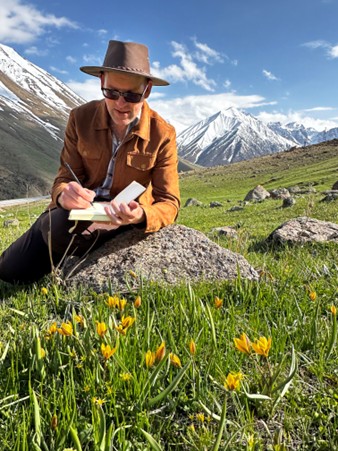
We then went on to Sary-Chelek, a most magical place. This large woodland glade is composed of many walnut, apple, pear, peach, cherry, maple and ash species, which is why it is called the ‘nut-and-fruit forest’. Among the trees and between boulders there were vast numbers of the endemic Tulipa anadroma. When the sun shines, the woodland is covered in yellow stars, what a beauty! And as if this was not enough, there were large clumps of wild peonies (Paeonia hybrida), which contrasted with their large intense-magenta blooms. It was fun observing the insects in the flowers, buzzing around to collect as much pollen as they could gather.
Across the mountains, we entered a hot valley. As temperatures rose over 30 degrees Celsius, we had little hope of finding tulips in flower there, but during a roadside stop where the film crew wanted to fly some drones over a coalmining area, we found some unknown Tulipa sp., likely one of the white flowering taxa, among the dried sand at the edge of an old coal pit. Their wavy, grey-green leaves characteristic of such desert tulips, the swollen fruits nearly ripe.
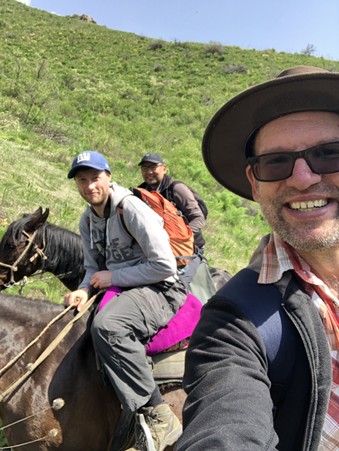
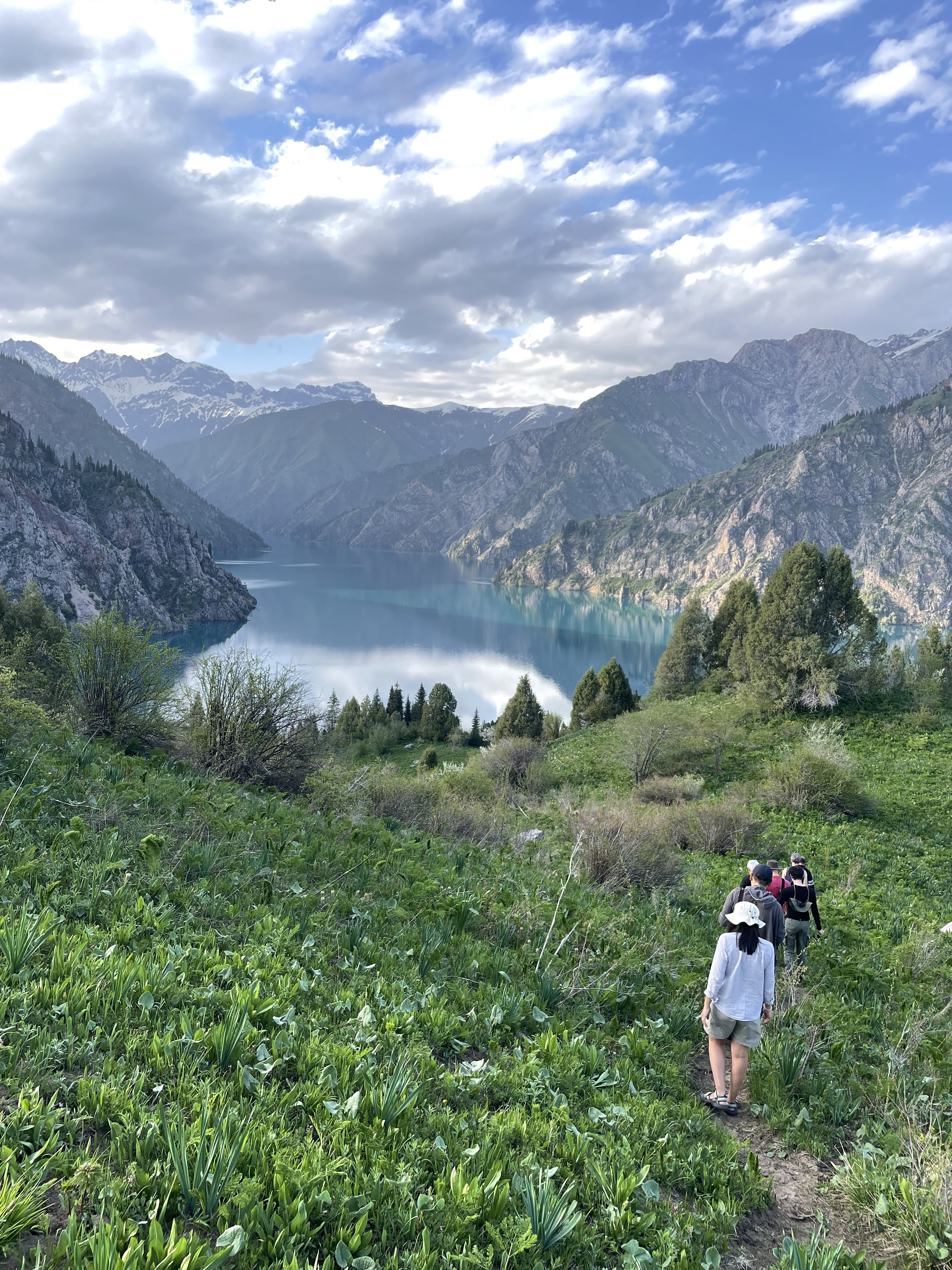
We went back into the rugged mountains where melting glaciers ended into fresh, crystal-clear mountain streams. The pass went over 3200 m and in places snow still sat by the road. Eventually we reached the village of Janibazar, where we stayed the night to visit the Chatkal Nature Reserve in the morning. The rangers had organised horses for us to ride, but none of us were experienced riders, so we were a bit hesitant at first. Even though horses can get you to places faster than walking (certainly when walking at “botanist-speed)”, it does create a problem when you want to botanise along the way. High up on the horse, the small tulips are often hard to spot among the grass! We did find a nice population of Tulipa kaufmanniana, with its pretty yellow, pinkish white and carmine-red flowers. It was interesting to see that the red flowers mostly attracting beetles, whereas the yellow ones were more frequently visited by bees, although this was not exclusively so, explaining why the population had mixed colours. We did notice that the horses eat several plants, but tulips are not on the menu. After several hours on horseback, we arrived at the ranger station with sore backs and limbs, so a visit to the local sauna to warm us up was most welcome.
Back in Bishkek a day later, via an eight hour drive that included a 3800m mountain pass where in parts the road was carved through an old snowdrift, creating walls of snow and ice on both sides, we had time to reflect on this amazing week. I have learned a lot about documentary making and of course about the culture and natural history of Kyrgyzstan. Sightseeing the city in a Lada, crossing the mountains past glaciers and spotting tulips from horseback. It was the most amazing adventure, and I can hardly wait to return to this stunning country with its friendly people and fantastic flora.
Kali
For a wildlife conservationist in Central Asia, spring is always a season of fieldwork and exploration. This year, I was lucky to be part of my two most longed-for spring adventures: monitoring saiga calving and, of course, witnessing the blooming of wild tulips.
I’m not a specialist in tulips, but after being involved in the development of a conservation project for wild tulips in Kyrgyzstan, I eventually became part of the IUCN Wild Tulip Specialist Group and a huge fan of wild tulips. So, when I heard that the WTSG was organising a trip for a film crew to document wild tulips, and that there would be a chance to join them, I couldn’t miss the opportunity. It was an incredible chance to travel alongside experts who can identify every tulip and plant species, have answers to all my silly botanical questions and have a heap of funny, fascinating stories to share.
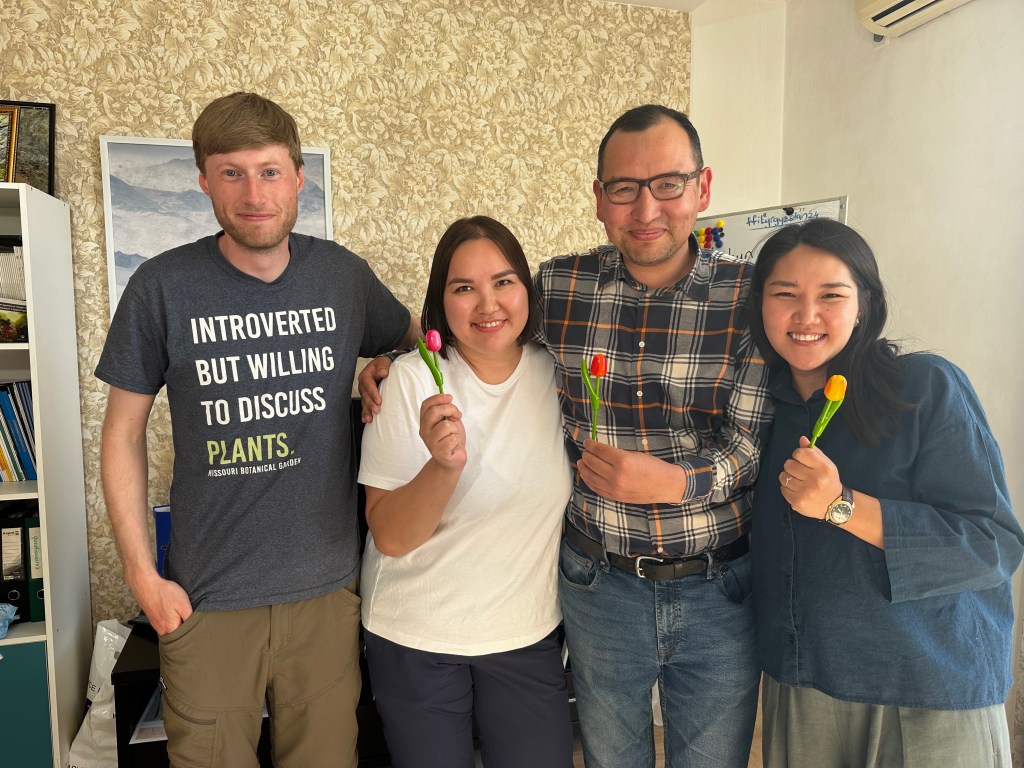
From time to time, I meet people who are surprised to hear that tulips grow in the wild and that they actually originate from Central Asia. Even though I know this well myself, and have seen wild tulips countless times before, each encounter amazes me like it is my first time and makes me want to take more pictures to capture this incomparable excitement.
This time, I was lucky to see, smell, take a picture and admire three species: Tulipa dasystemon, the yellow form of Tulipa greigii, and Tulipa anadroma. All three are strikingly different in how they look, where they grow, and even how they smell.
Tulipa dasystemon, found on the Ala-Bel pass, is rather a timid, small tulip that grows at high elevation, surrounded by other alpine flowers, green pastures and snow mountains on the background. The amazing harmony of colours of that landscape was an example of how nature can be so diverse and adaptable, and yet remain so perfectly beautiful and balanced.
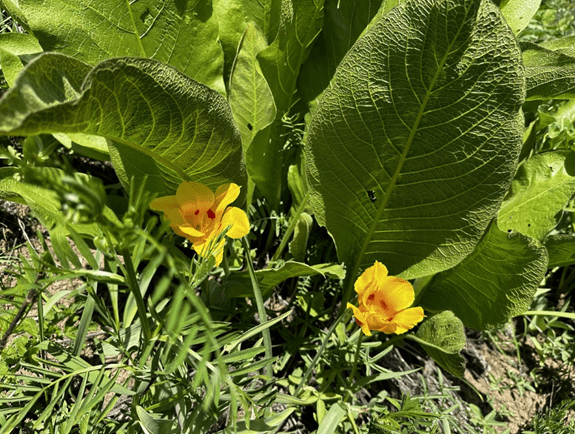
Whenever I thought of T. greigii, I imagined its classic red form. But this time, we found yellow-flowered individuals hiding in the shade of enormous green burdock leaves on the hills near Toktogul. Ormon believes that T. greigii smells like chocolate, but to me, the scent was more like the fresh, ephemeral scent of wildflowers. There, we had a lively discussion with a representative of the local pasture committee raising questions like: “Why do we need to save this one plant? What use is it to humans?”. Sadly, he, like many humans, had the mindset that nature must give us something directly in return for it to be worth protecting. It is often hard to explain that it is not always possible to quantify what we receive from nature. Every plant and animal are an intrinsic part of the ecosystem, and they thrive only within a healthy, interconnected community. For me their existence should not revolve solely around human use. Fortunately, other representatives of the local community shared my view and will look to protect these flowers regardless of their direct value.
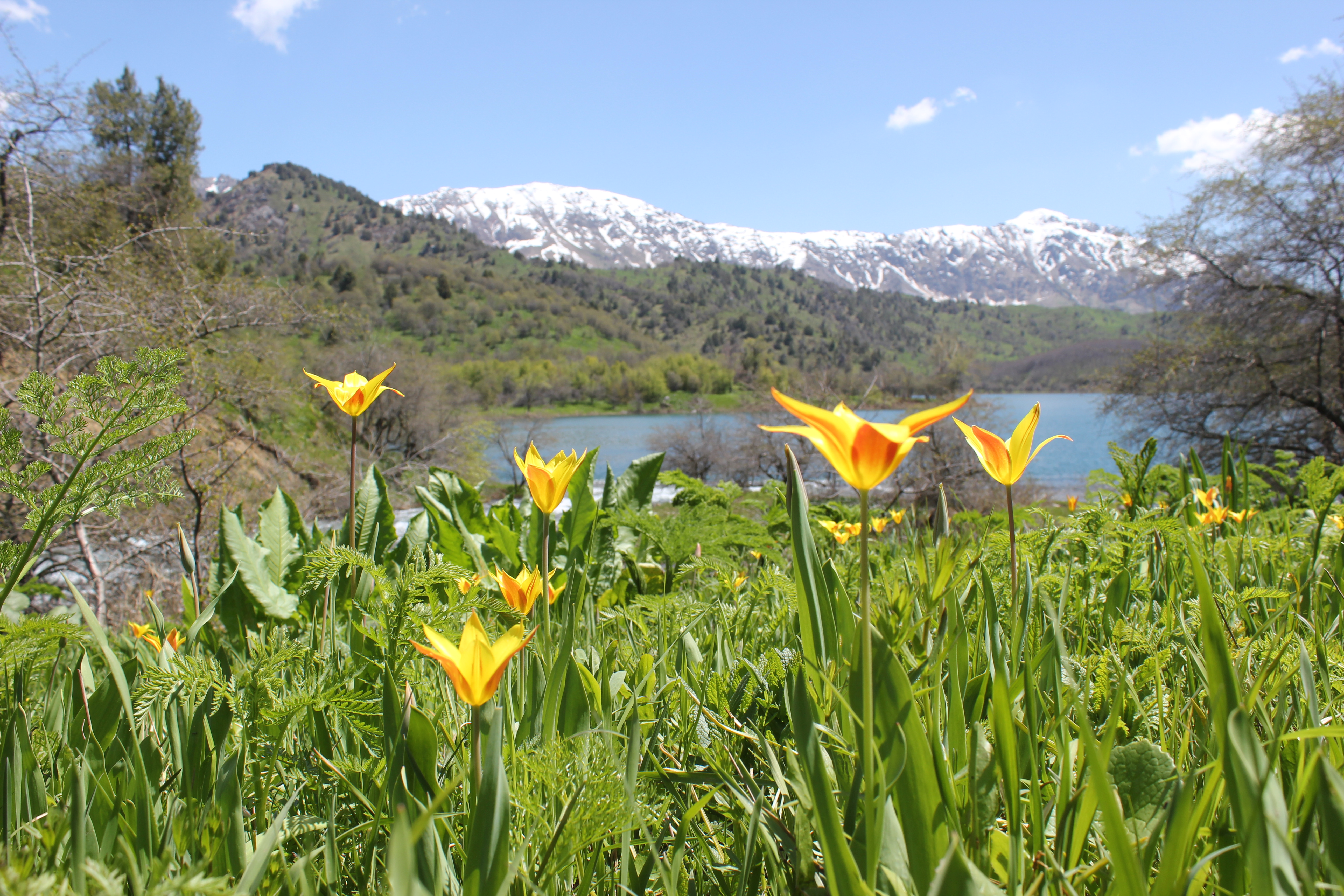
The next day, we continued our trip to the magical place of Sary-Chelek, where we found T. anadroma, tall, elegant, and proudly displaying its bright yellow petals during the day, only to hide them gently in the evening. It amazes me how tulips grow in such vastly different ecosystems—high mountains, forests, deserts, among rocks. Their adaptability is incredible, yet they always manage to stand out and capture your attention. Tulipa anadroma is an odd species as it grows in dense woodland where I hadn’t expected it to be able to survive, but it seems to be thriving in the shade of fruit and nut trees.
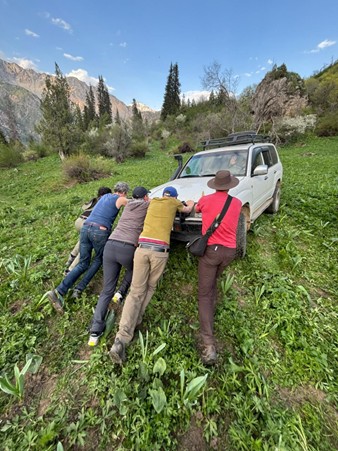
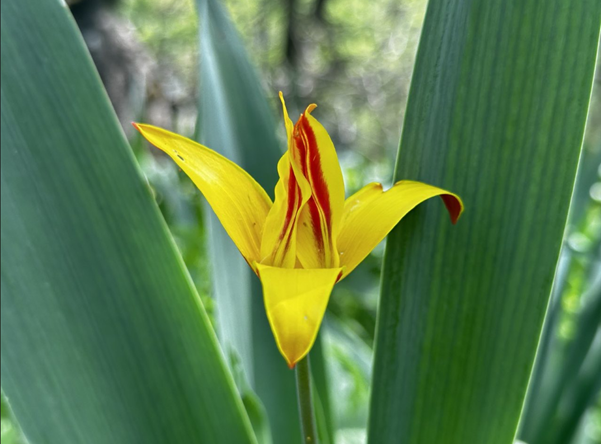

In Sary-Chelek, we had minor altercations with tourists who were caught picking tulips. We had to explain numerous times why it is not allowed to pick any flowers in the reserve, especially rare endemics like T. anadroma. Much more awareness-raising work is needed! After Sary-Chelek, our paths diverged. The film crew continued their journey to the remote Chatkal mountains, while I headed to the steppes of Kazakhstan to see the baby saigas. I remain hopeful that one day I’ll make it to Chatkal in spring, to witness the stunning blooming carpets of T. kaufmanniana that can be found there if you know where to look.
Brett
This trip enabled me to travel back to Kyrgyzstan for what was my seventh visit to this amazing country. This place is almost like a second home to me after spending many months there over the past decade during my Masters, PhD, and the subsequent years. Arriving at the airport to be greeted by Ormon’s smiling face was a reassuring constant to many of my trips and this time was no different. However, there was a lot of uncertainty to come… would the tulips be in flower? Would the mountain passes be open? Would the camera crew be okay with the bumpy roads? The initial days were a whirlwind of last-minute preparation, although most things were in place thanks to Ormon’s wonderful efforts over the last few months to get everything ready.
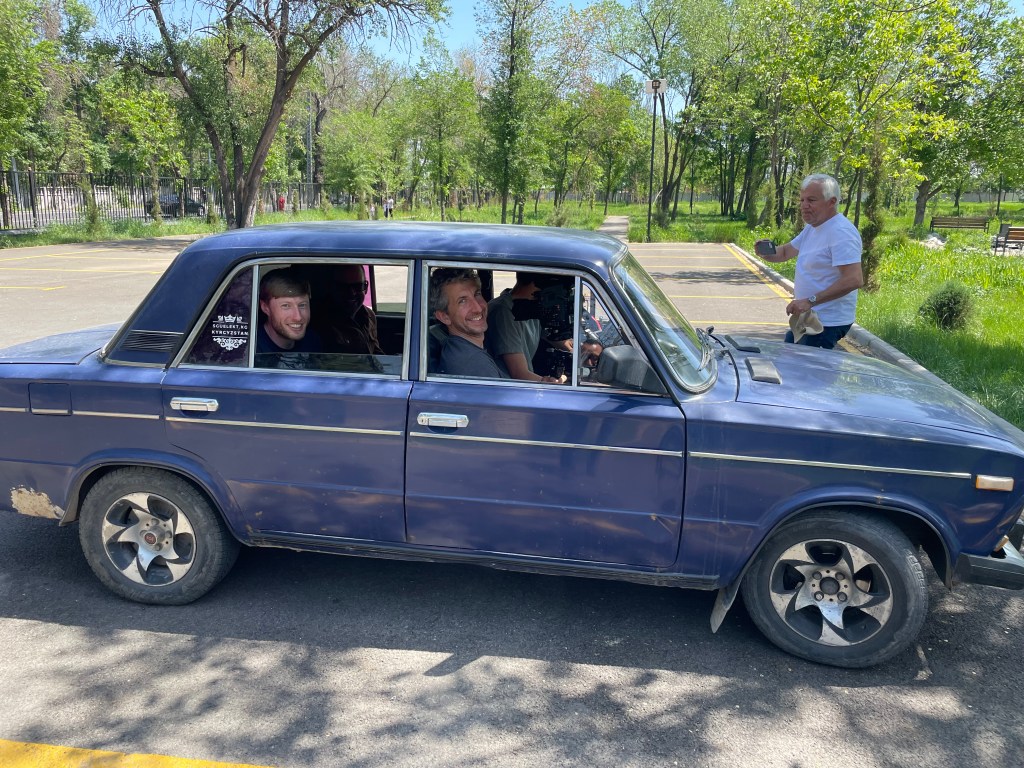
The first days of filming were surreal. We spent two days in Bishkek getting some of the initial shots of the documentary, and this was a completely unique experience for me. Being directed around and taking and retaking shots in a number of locations I had visited many times before was bizarre. The highlight for me was Maarten and I being driven through the centre of Bishkek in a little old Soviet Lada, with a camera crew ahead, and all the passing drivers looking at us as if we were famous movie stars. Nonetheless those dreamy Hollywood days came to a close and the moment to leave the safe haven of Bishkek was upon us.
Weaving along and climbing the mountain passes of northern Kyrgyzstan we began our journey. These were roads I knew well, but when we started seeing it from drone footage that was being shot, we all began to see these roads and the landscapes from a whole new perspective, and it was stunning. Like a bird soaring you could see our little vehicle trundling along with the vast peaks covered in snow behind and the deep valleys from which we had come winding below. As we crossed over into the alpine valleys of the Suusamyr valley we started to explore the area for tulips. The small, but reliably Tulipa dasystemon was in full bloom and this caused our little cavalcade to come to a halt.
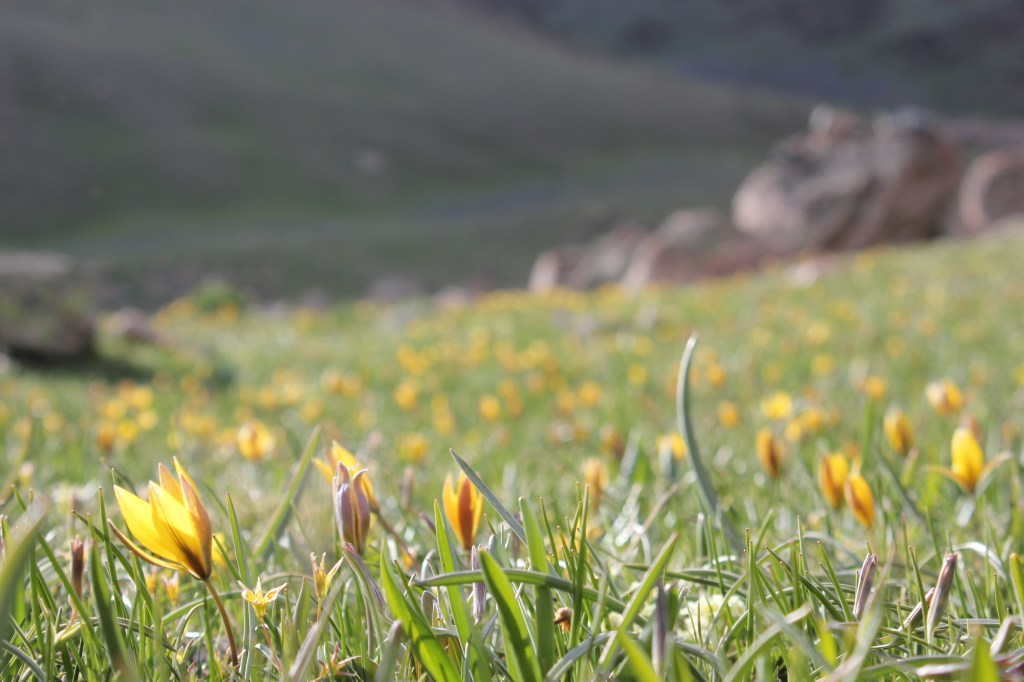
Tulipa dasystemon is a little yellow flowering tulip, which many people would not notice, but here we were able to show the camera crew and photographer the wonderful charm of this little plant and how the world looks so different from its perspective. We explored the population, whilst being captured on camera, although there was no need to act enthusiastic as we were all delighted to see the vast yellow carpet spread out in front of us.
The next days went by in a blur. We followed locals off the beaten track to a new population of tulips near their local village avoiding goats on the road and testing the suspension of the car to its limits; we travelled back to the T. dasystemon population to get some further shots of this plant with the light just right; and we made the long journey to Sary-Chelek Biosphere Reserve where we would spend a few days. Of course there were a few toasts of vodka and cognac in the evenings as well.
Sary-Chelek is a special place for tulips. It has three species found nowhere else on Earth and has one of Kyrgyzstan’s most charming species T. anadroma. In this park it grows in extraordinary numbers, but we have never found it growing outside the park. I had travelled here in 2019 with Ormon and reassuringly the population looked like it was at least the same size as then, if not bigger now. The team had an incredible time shooting the lush green forest and its undergrowth full of yellow and red tulips. Both the still photographs and the video footage helped capture the remarkable scene of Sary-Chelek in the Spring, but this will never beat seeing the real thing. The sparkling alpine lakes, the snow sprinkled towering mountains, and the dense array of healthy forest ecosystem are something truly special. I have so many fond memories of this place from previous trips, and I felt extremely lucky to make new memories with old and new friends at this unique tulip stronghold.
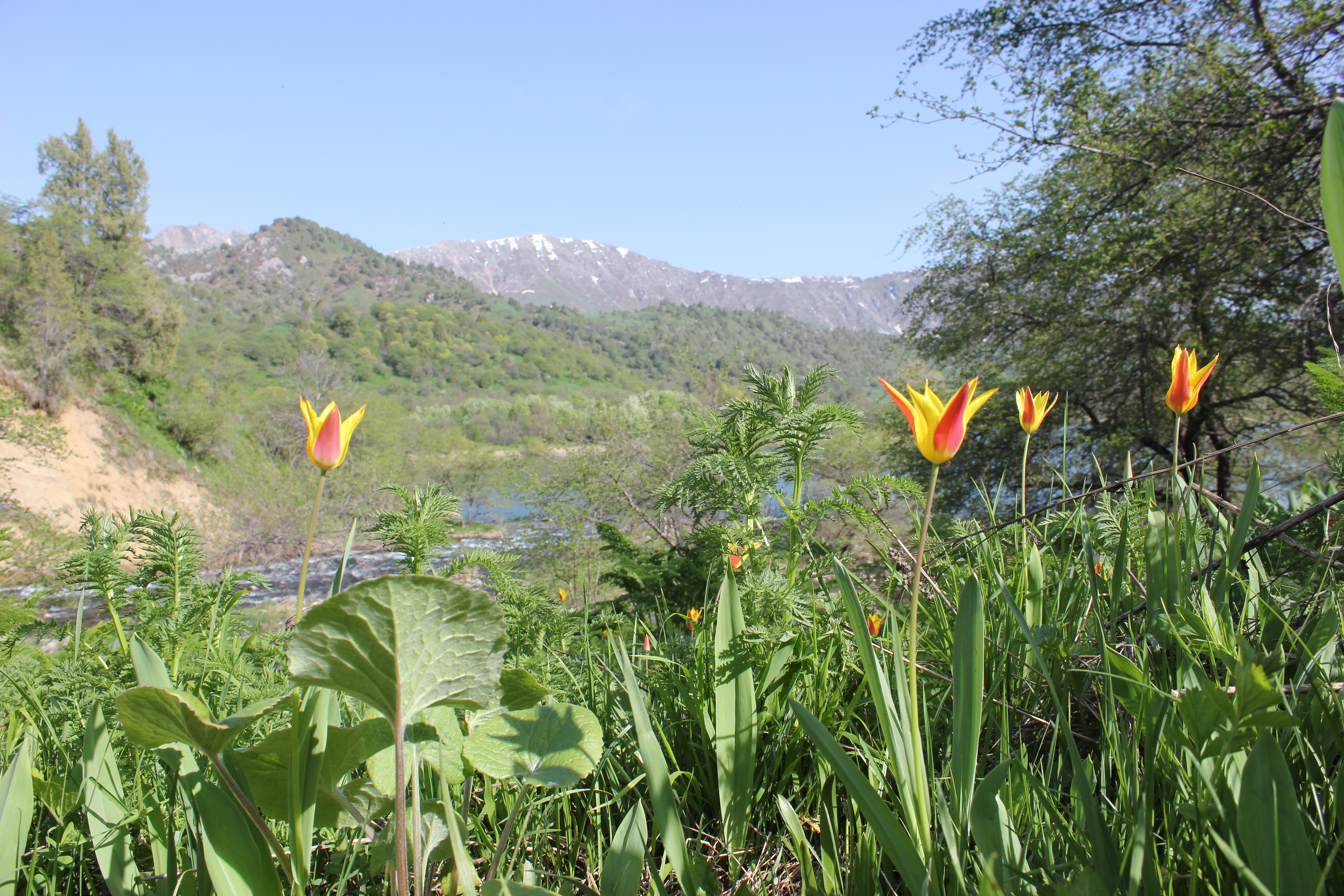
Heading further west we embarked on the most remote part of our trip. I remember being in this area many years ago camping and the night sky was the perfect glow of stars. A true wilderness area where the night sky is not dampened by light pollution and in the day, locals are shocked to see you in their village. Although on this trip I was visiting many places I had been before I did, for the first time, spend a day upon a horse in the Besh-Aral Nature Reserve. This is a strictly protected area where the public are not allowed and so it was a privilege to be able to ride three hours up into untouched nature. Finding our little tulips thriving in this landscape that humans have not yet left much of a fingerprint on. I am not a confident horse rider and there were some pretty sketchy moments, but this is a memory I will forever treasure.
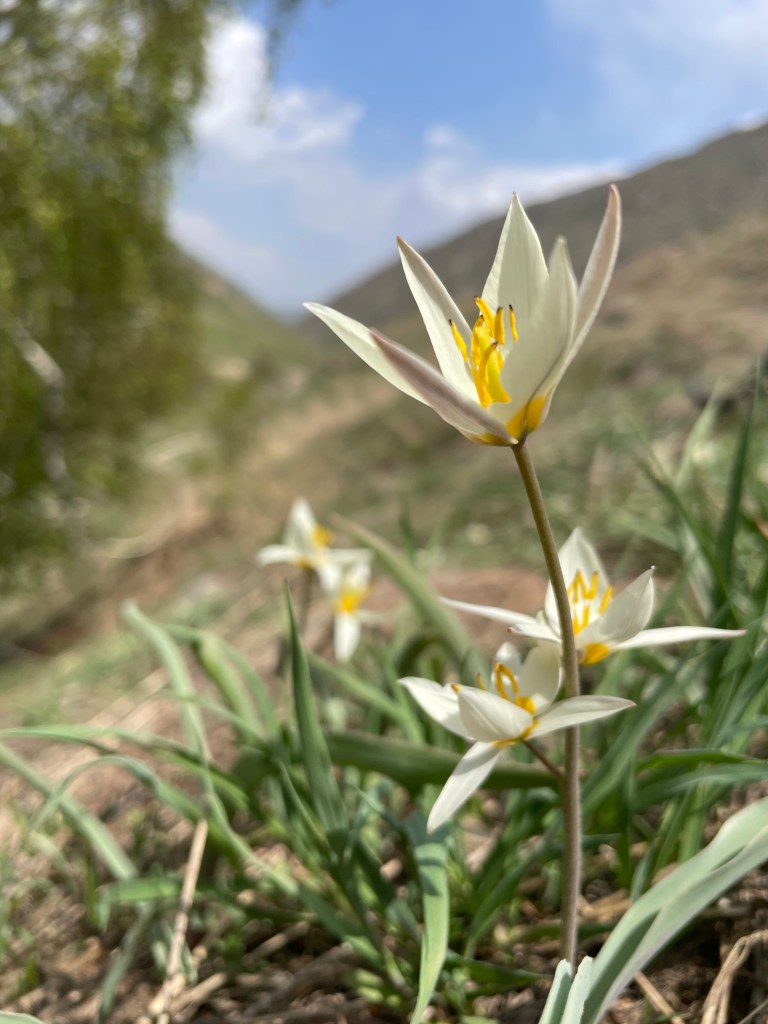

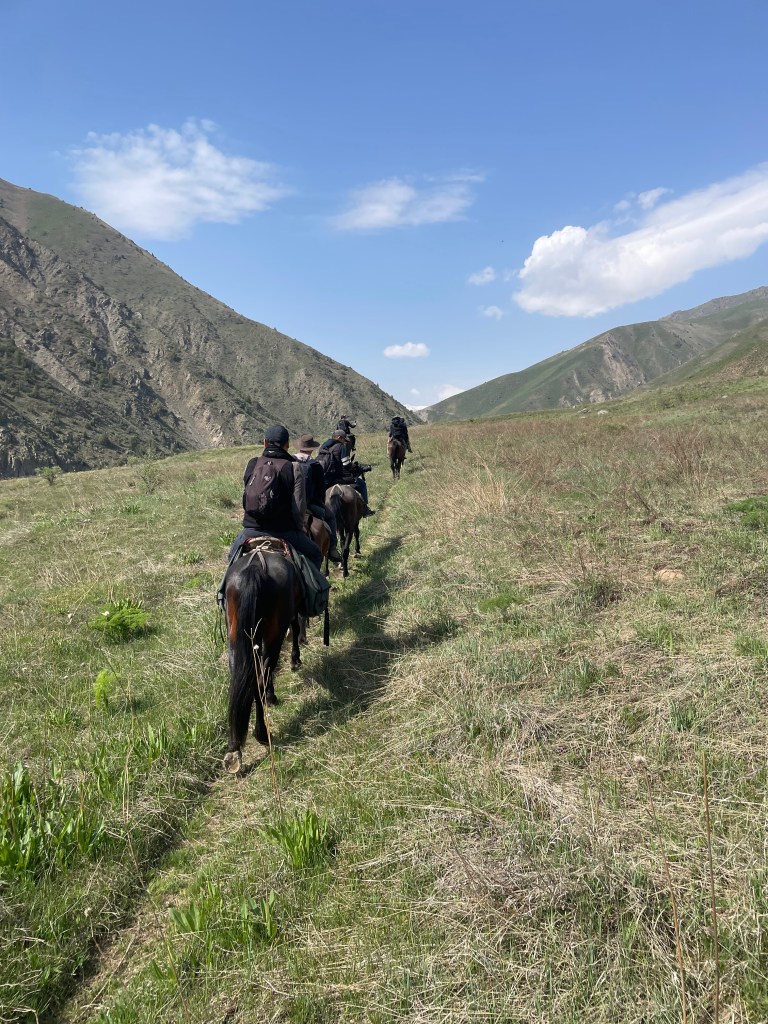
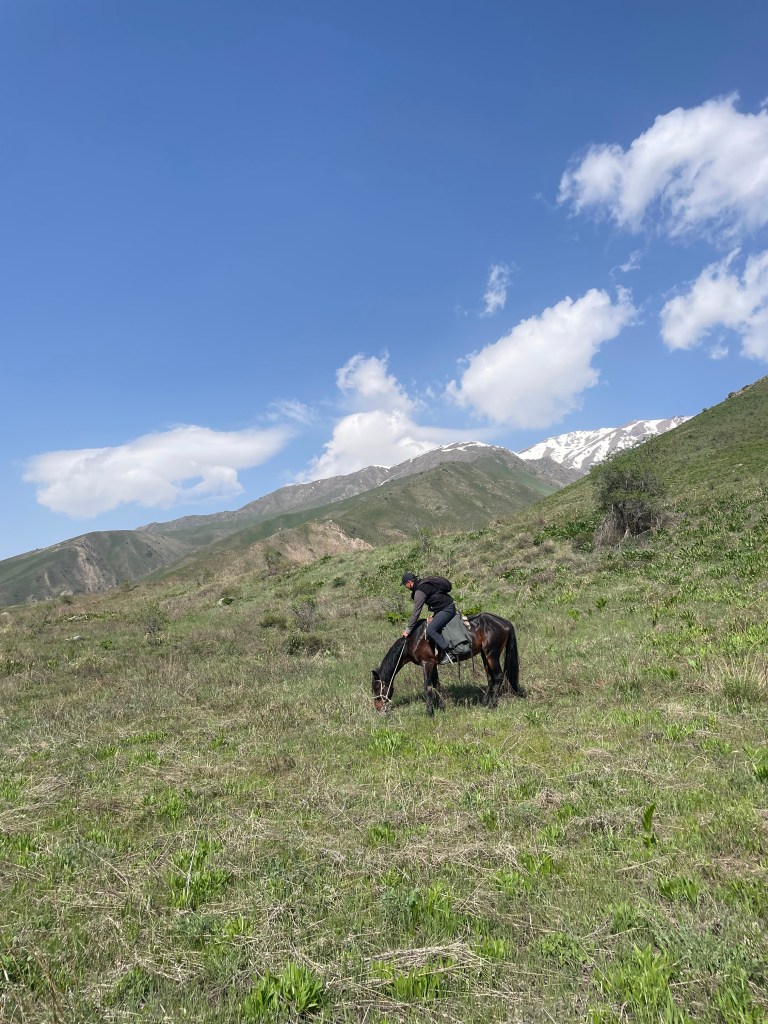
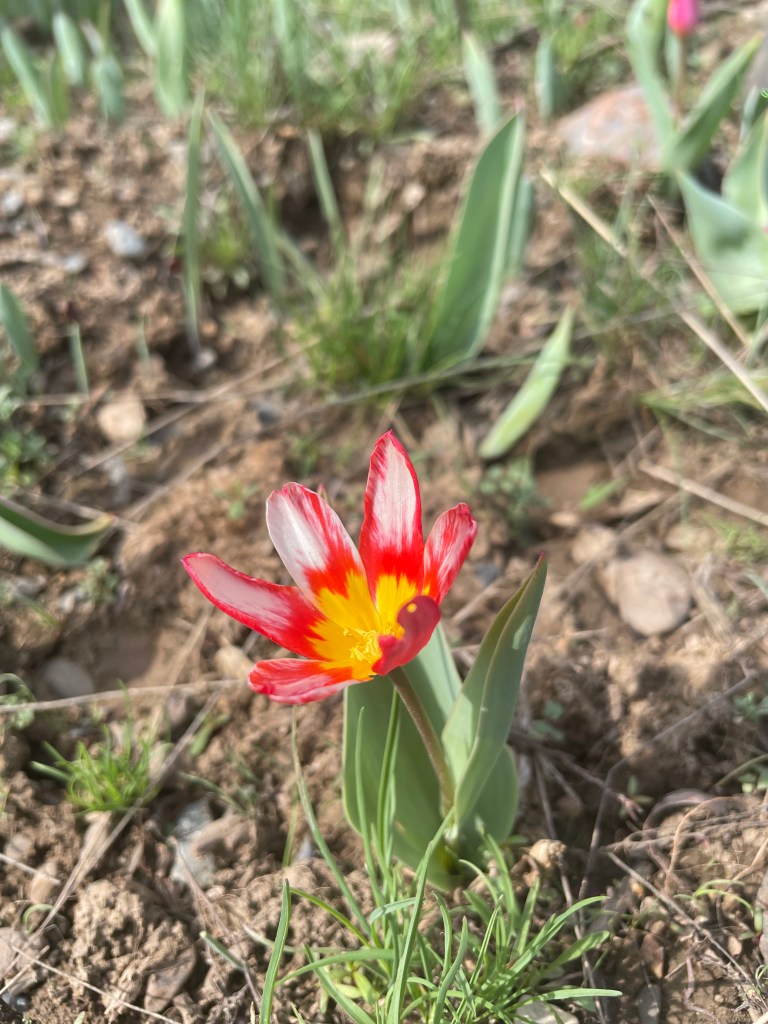
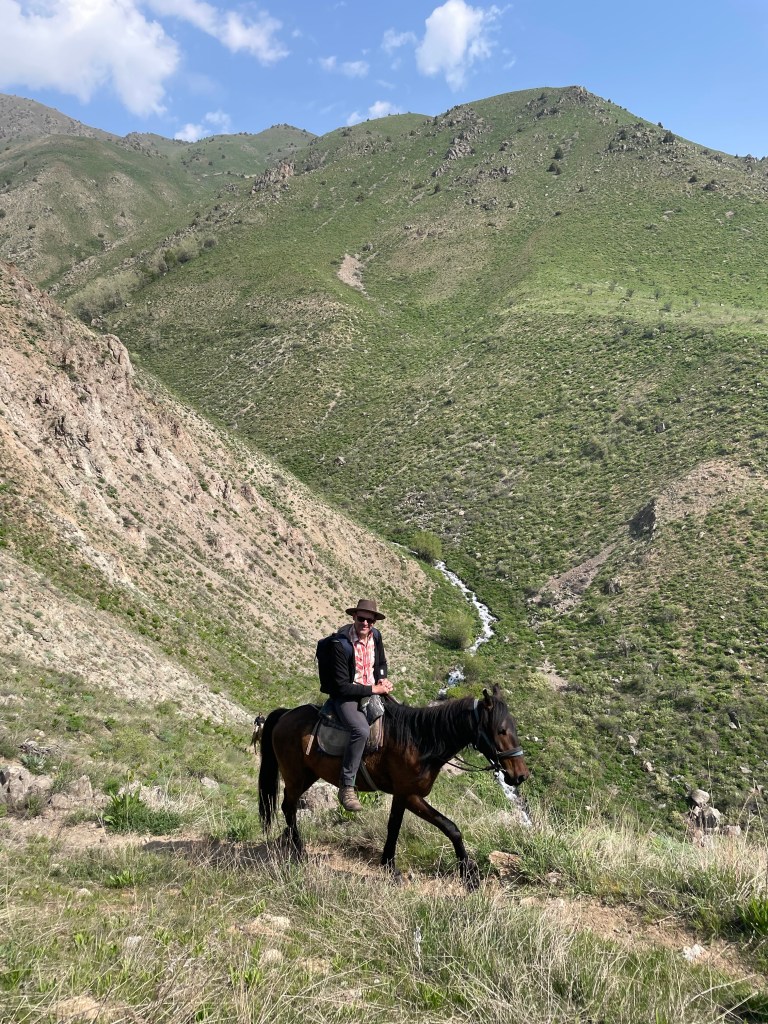
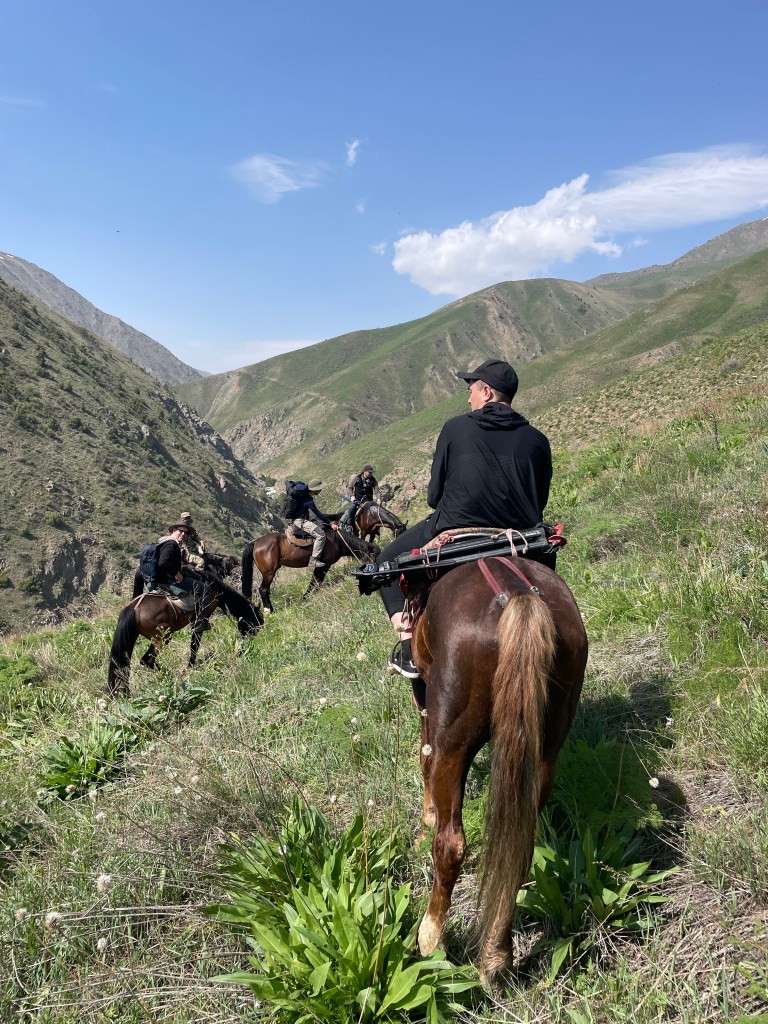
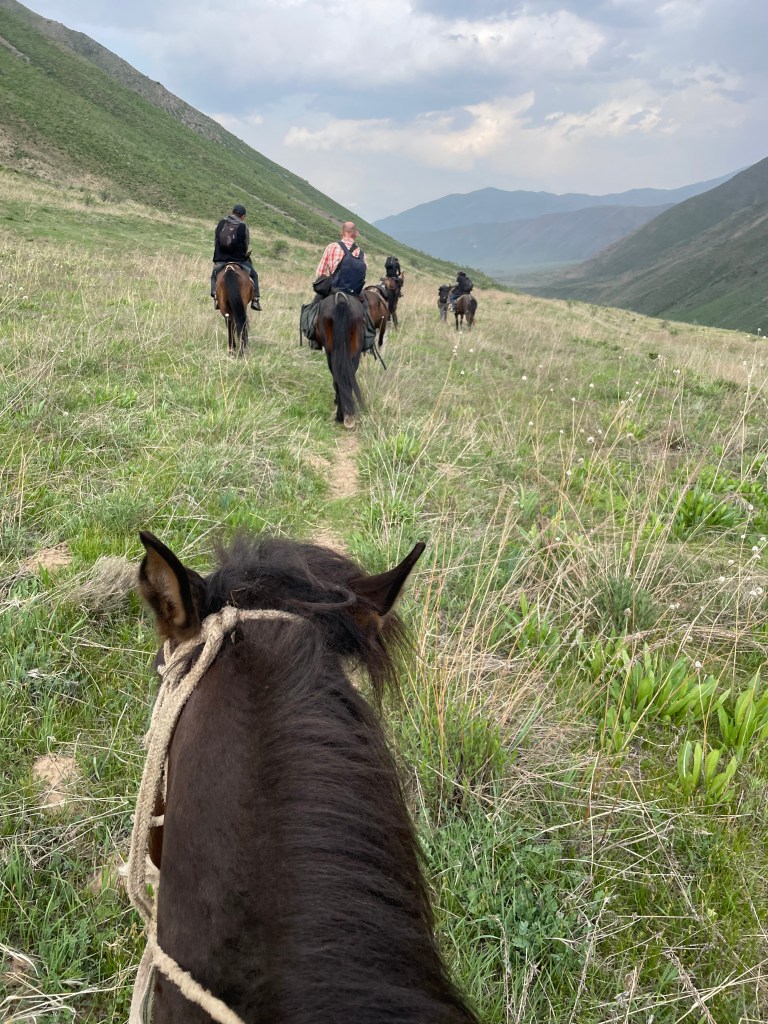
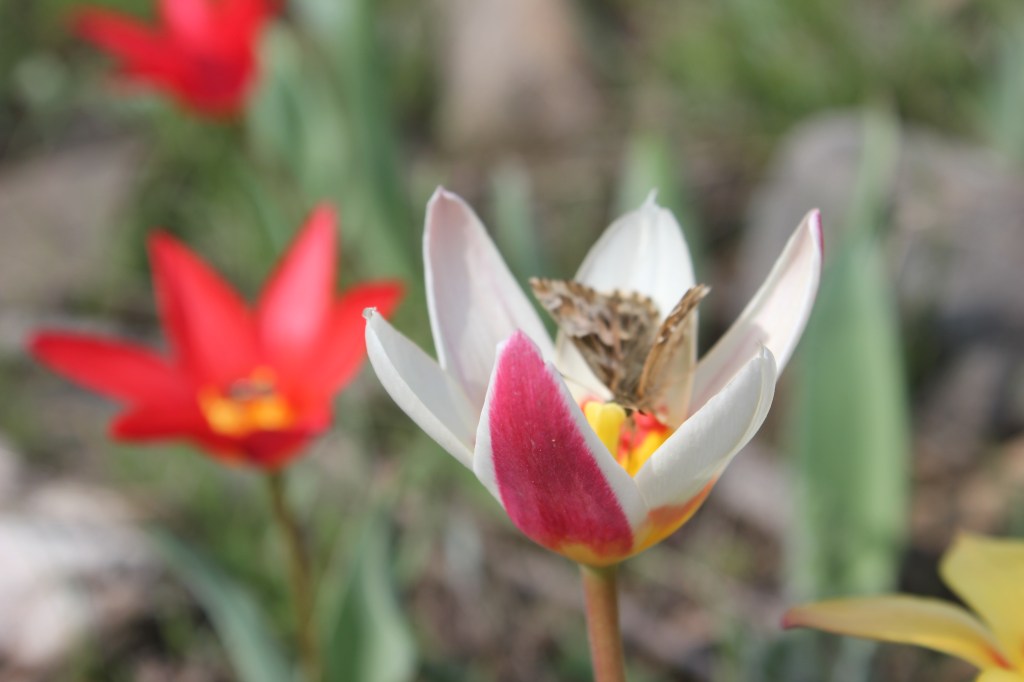
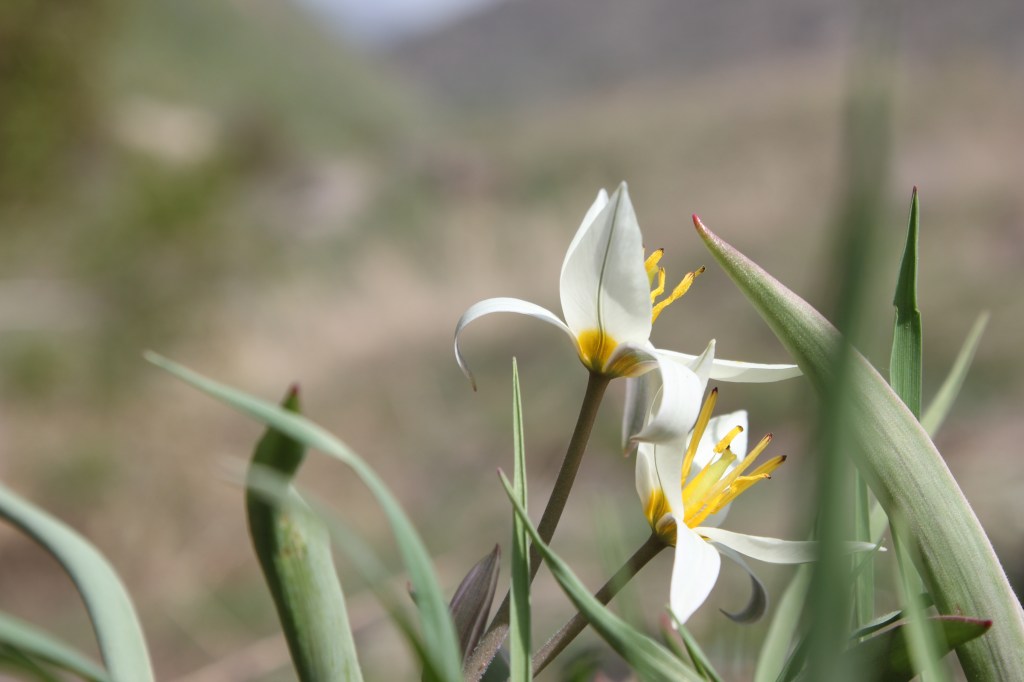
On the final few days, we explored the Chatkal valley where we had unfortunately just missed the vast flowering of T. kaufmanniana (although we got some shots of it in Besh-Aral). By this point the team was a close-knit family sharing jokes and drinks over dinner and even venturing to a local sauna together. We were all exhausted but nothing bonds people together like sharing an epic journey through the culture and nature of a country. As we headed back to Bishkek, I remember thinking how far I had come from the first days of my research on wild tulips, to these magical days sharing tulips with new people from all over the world. What a lucky position I am in to be able to work on these magnificent flowers with so many remarkable people and to travel halfway across the world to stand in the mountains and feel at home.
You can read about Albert Dros, the professional photographer’s experience on the expedition here – https://www.albertdros.com/post/the-tulip-origin-wild-tulips-in-kyrgyzstan and look out for “La Folie des fleurs” series, which includes our epsiode on tulips, coming to ARTE Spring 2026 (hopefully).

 IUCN SSC Wild Tulip Specialist Group