On Tuesday the 9th of April I set off from London Stansted on my way to begin the first fieldwork period of the tulip conservation project. After two flights and little sleep I arrived in Bishkek on Wednesday and was warmly welcomed by Dr. Jarkyn Samanchina of the Kyrgyz Fauna and Flora International branch. There was no time for rest, and I was in a meeting by that afternoon. The tulips were already flowering in the South and there was little time to waste!
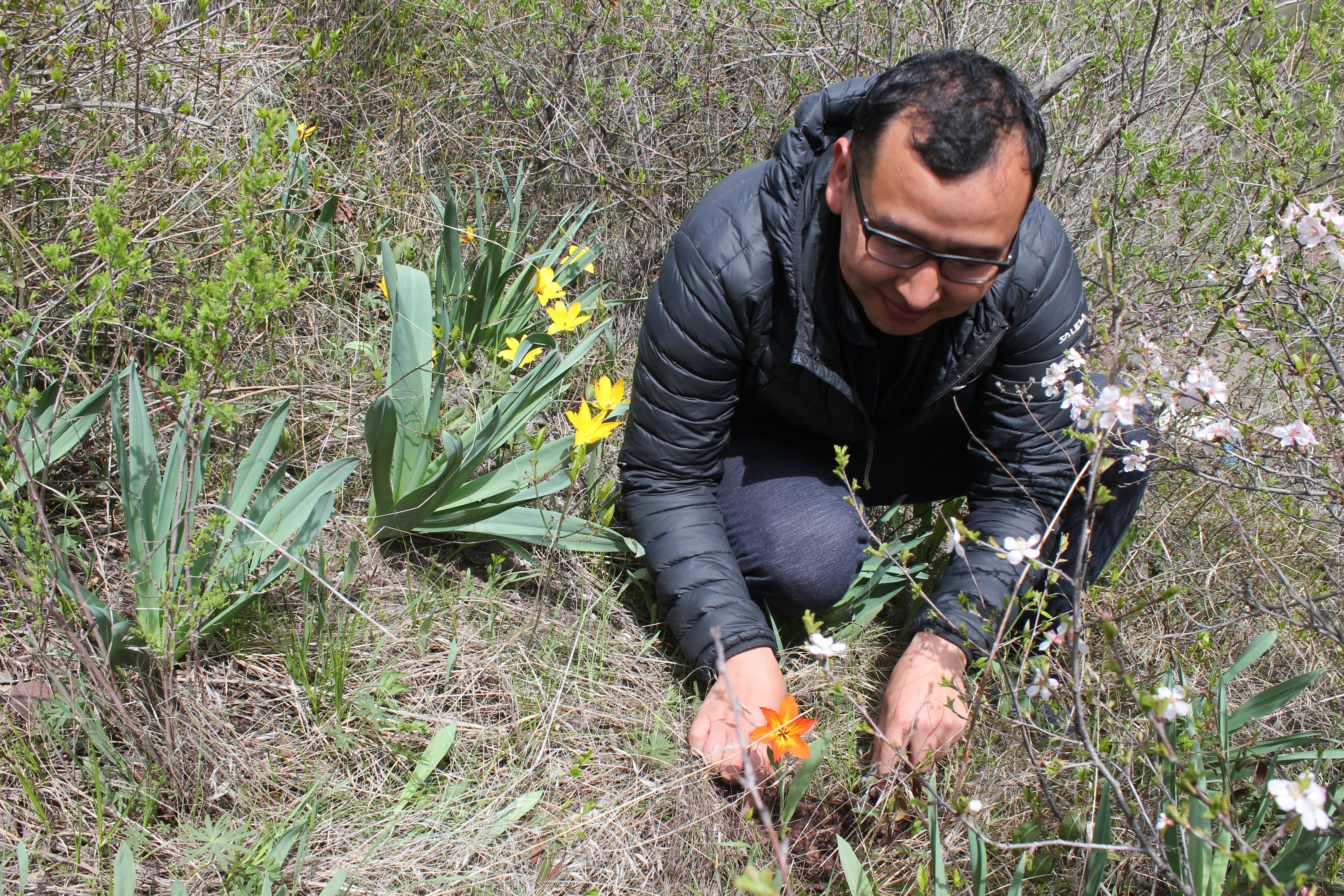
A team was put together that included Georgii, the best botanist in Kyrgyzstan, Natalia, an herbarium expert, Ormon, a translator and research assistant, and Isken, a driver who would get us from A to B whatever the distance or road condition. After gathering provisions on Thursday, we set off early on Friday morning towards the mountains and the South of Kyrgyzstan. Initial tulip stops in the foothills of the mountain pass between the north and the southern regions enabled us to find Tulipa binutans and the nationally Red Listed Tulipa zenaidae. These starkly different tulips, but equally beautiful were my first taste of what was to come. We gathered samples and recorded GPS locations before setting off again. Now we were heading through the mountains and descending into what is deemed the start of the South and our destination for this adventure.
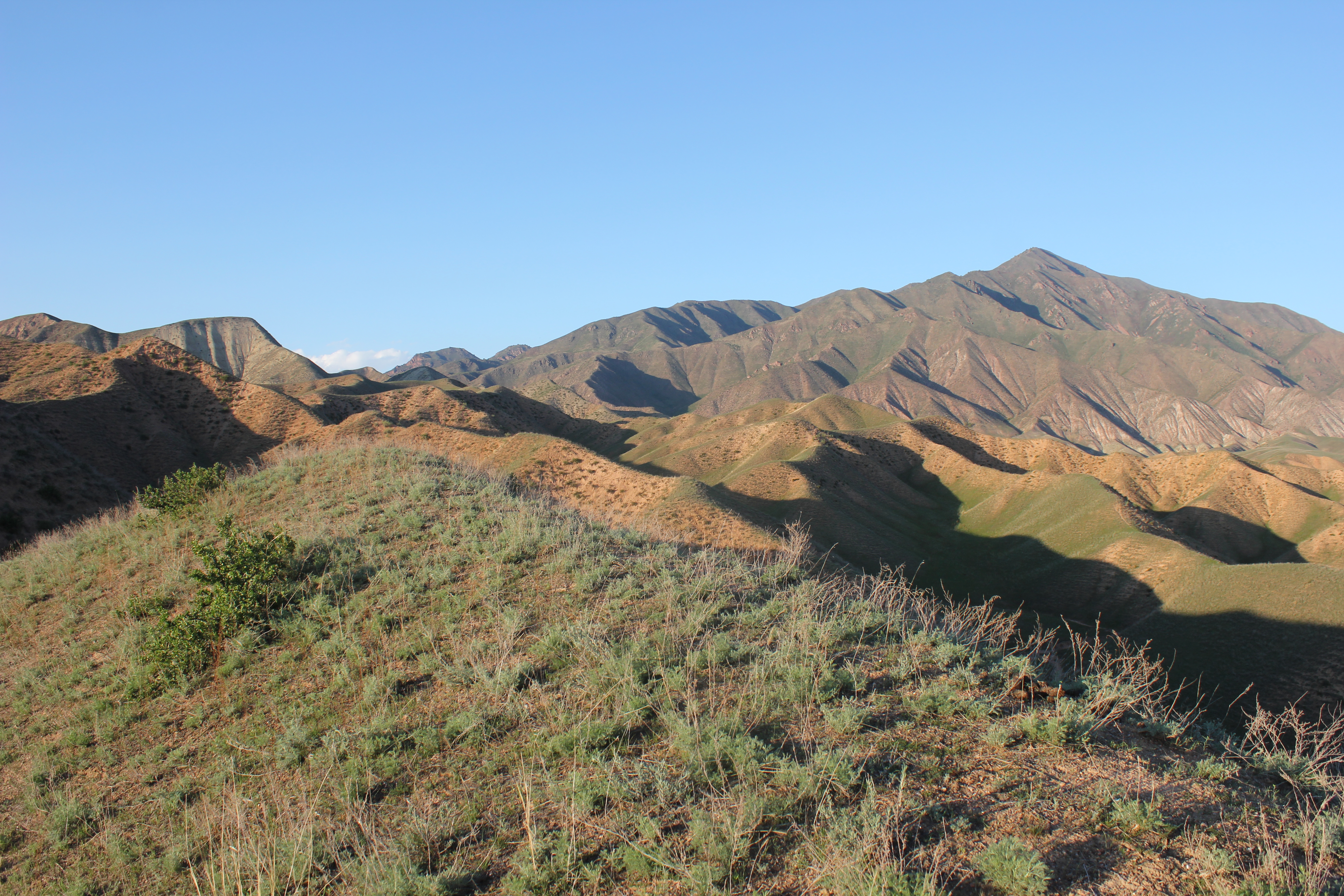
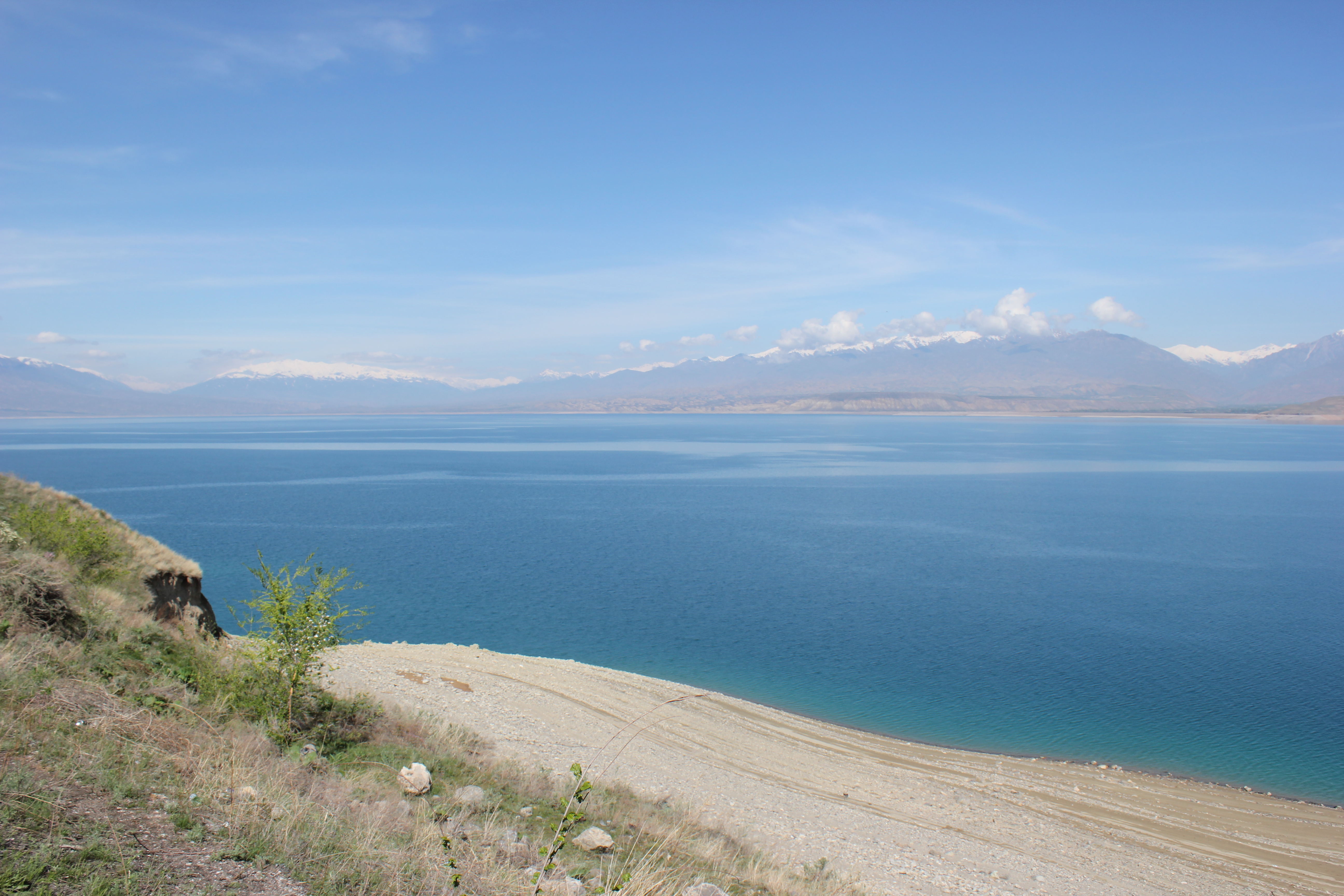
As the landscape changed from jagged mountains to rolling pasture lands so did the tulip species we were likely to find. After some exploring of the area, we located both Tulipa ferganica and Tulipa talassica. Similar looking species, but with Georgii’s expert eye they clearly had some fundamental differences. At this point the sun was setting over the tulips and the pasture lands and it was with great tiredness that we set up camp for the night next to the Toktogul reservoir; an exceptionally large body of water that looks a bit like a small sea.
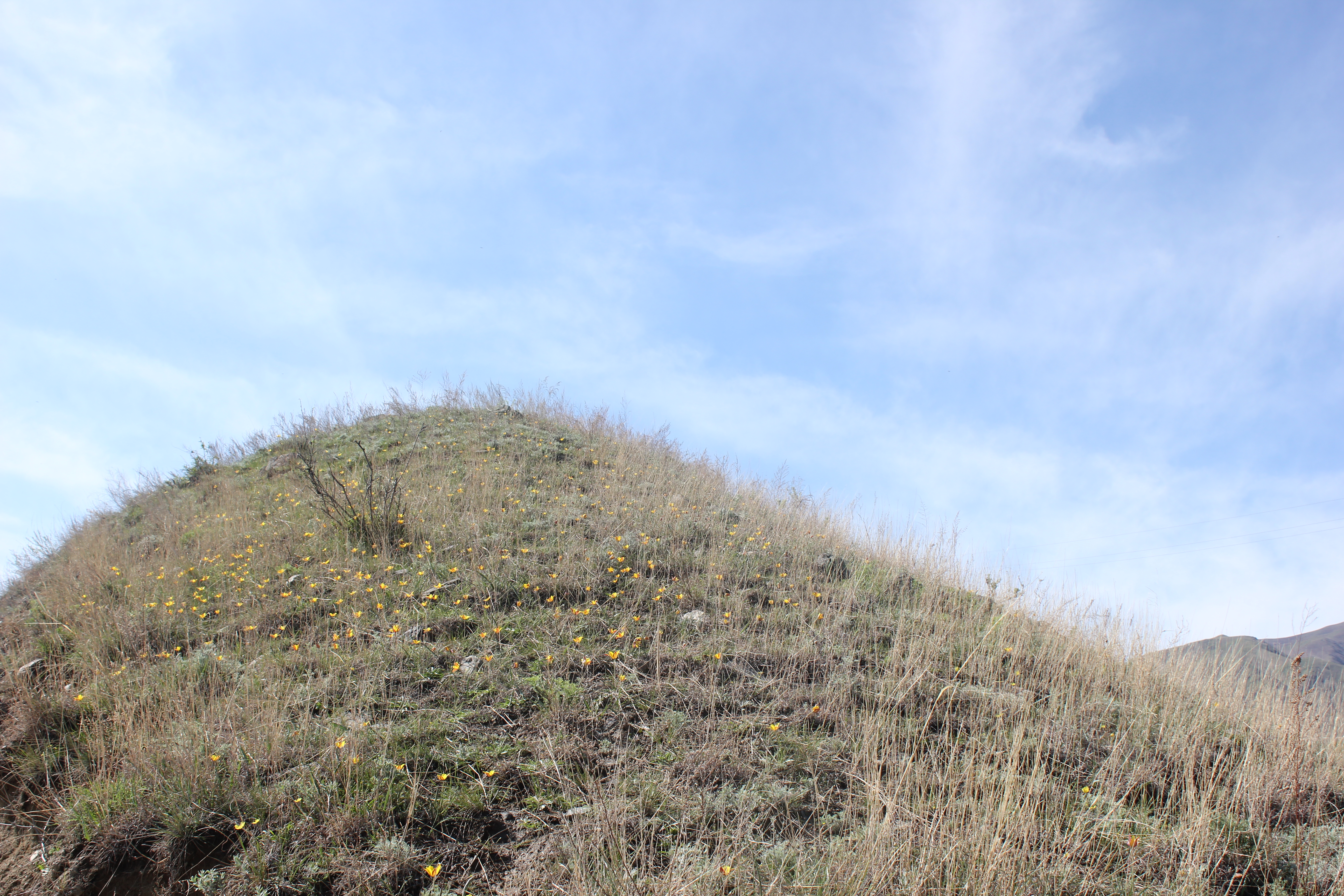
After a night under the stars we had a hearty breakfast of soup with beef and set off again for another long day in the car. Early in the drive we stopped and found species number three, Tulipa tetraphylla. This species is also Red Listed in Kyrgyzstan and is thought to be vulnerable to extinction. Growing next to it was T. ferganica making quite the sight in the early morning sun. The morning high was quickly over as we had to set off on a long journey in the car that, in the end, would last 9 hours. That is especially long when the roads are not always smooth and straight! When we arrived at the only hotel in a little town, it was completely dark and the team was extremely tired. We had passed through the cities of Jalal-Abad and Osh and were now deep in the South-West, but still with some ground to cover over the next few days.
The landscape changed dramatically again as we travelled further west the next day. We entered a semi-desert area and here we found some very different tulip species again. On an old oil field we found Tulipa turkestanica surviving in the dry heat in a bare moon-like landscape. Then, a little further on down the road, on an equally dry and sparse stony plain, we located the Endangered Tulipa rosea. It’s bright pink flowers standing out against the grey desert-like backdrop. As the afternoon was drawing on we headed off the main road to the village where we were meeting the local forestry director. After spotting a few more Tulipa rosea on the way we arrived at their house and were welcomed in to enjoy some refreshing tea. Rural life in Kyrgyzstan is difficult with few resources and a strong reliance on livestock, but in these areas, you will find some of the friendliest people in the country. We were fed well and slept deeply until the cockerel crowed at 5am.
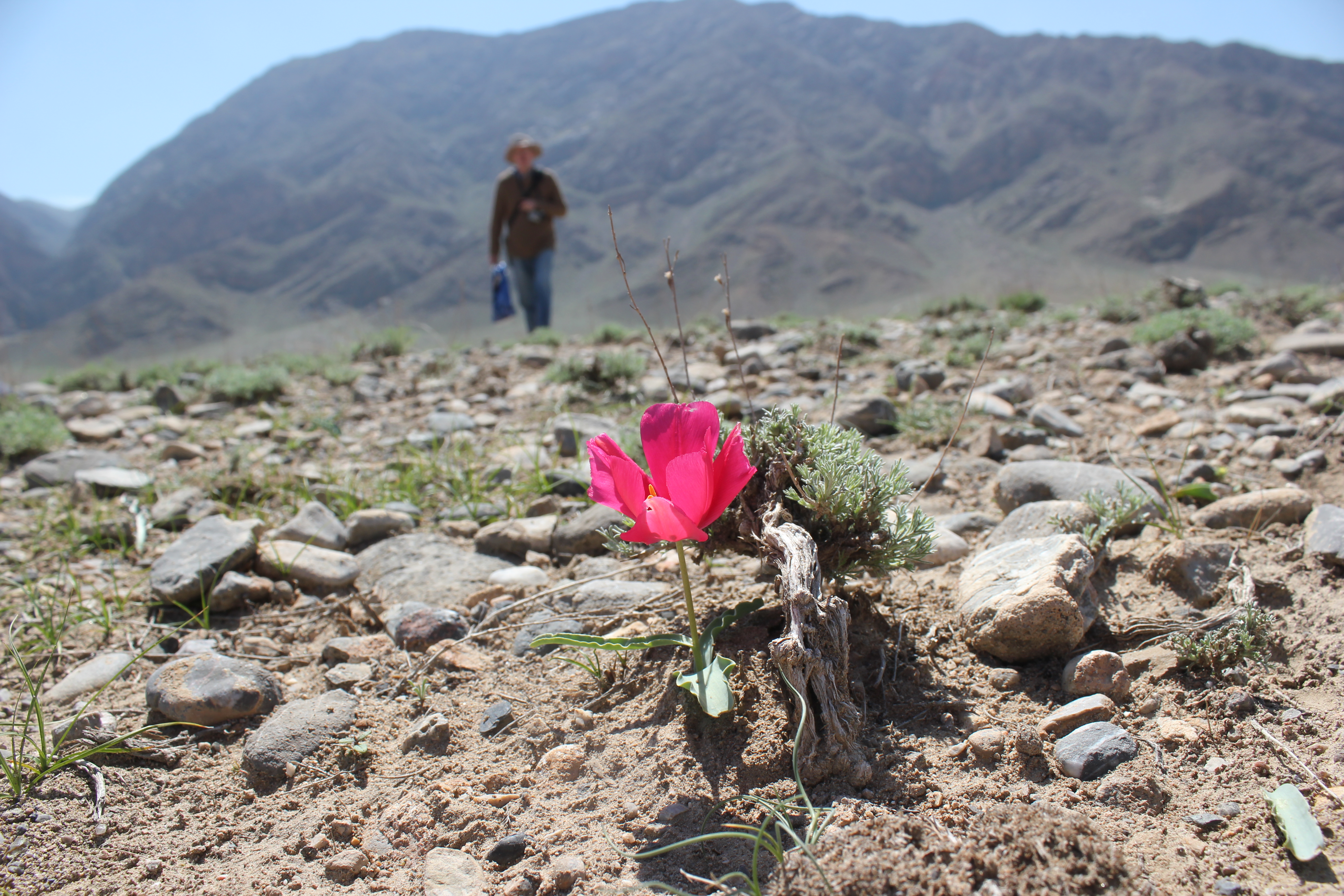
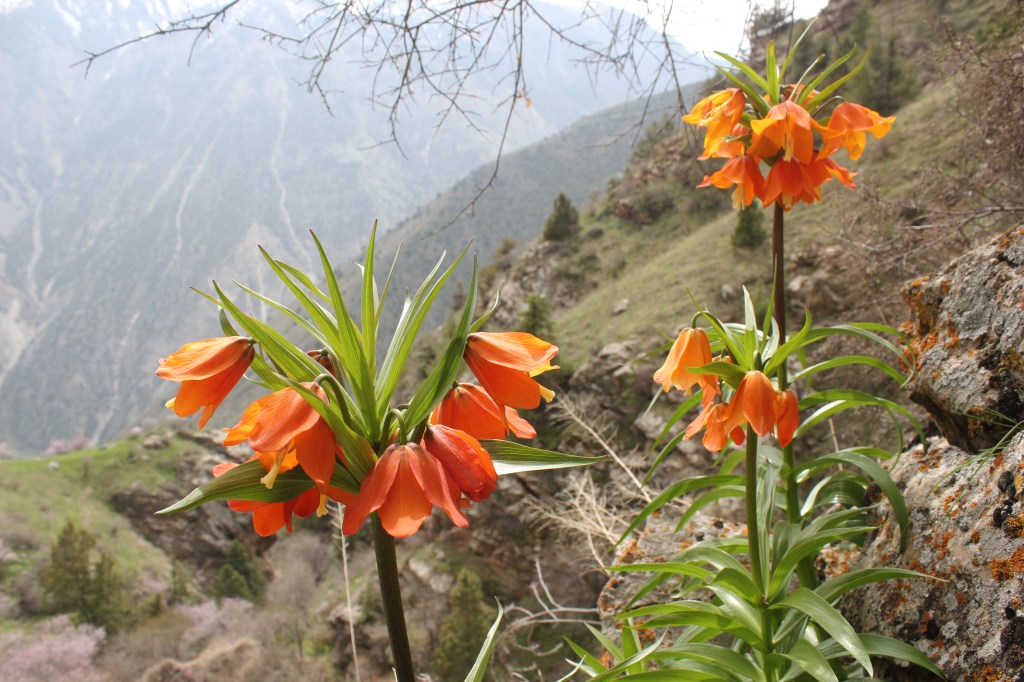
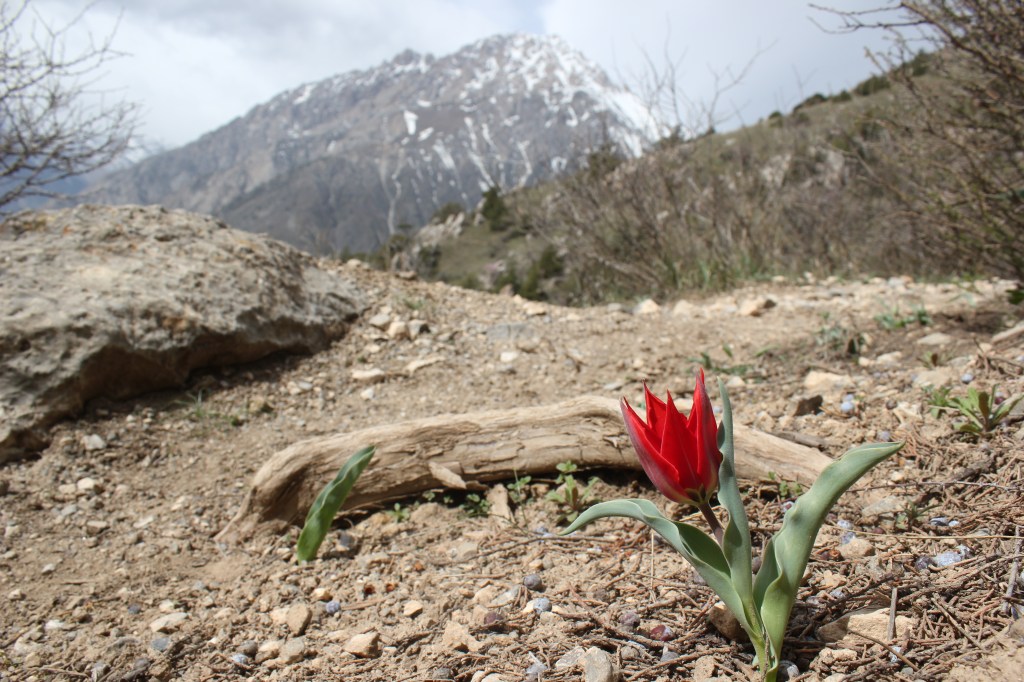
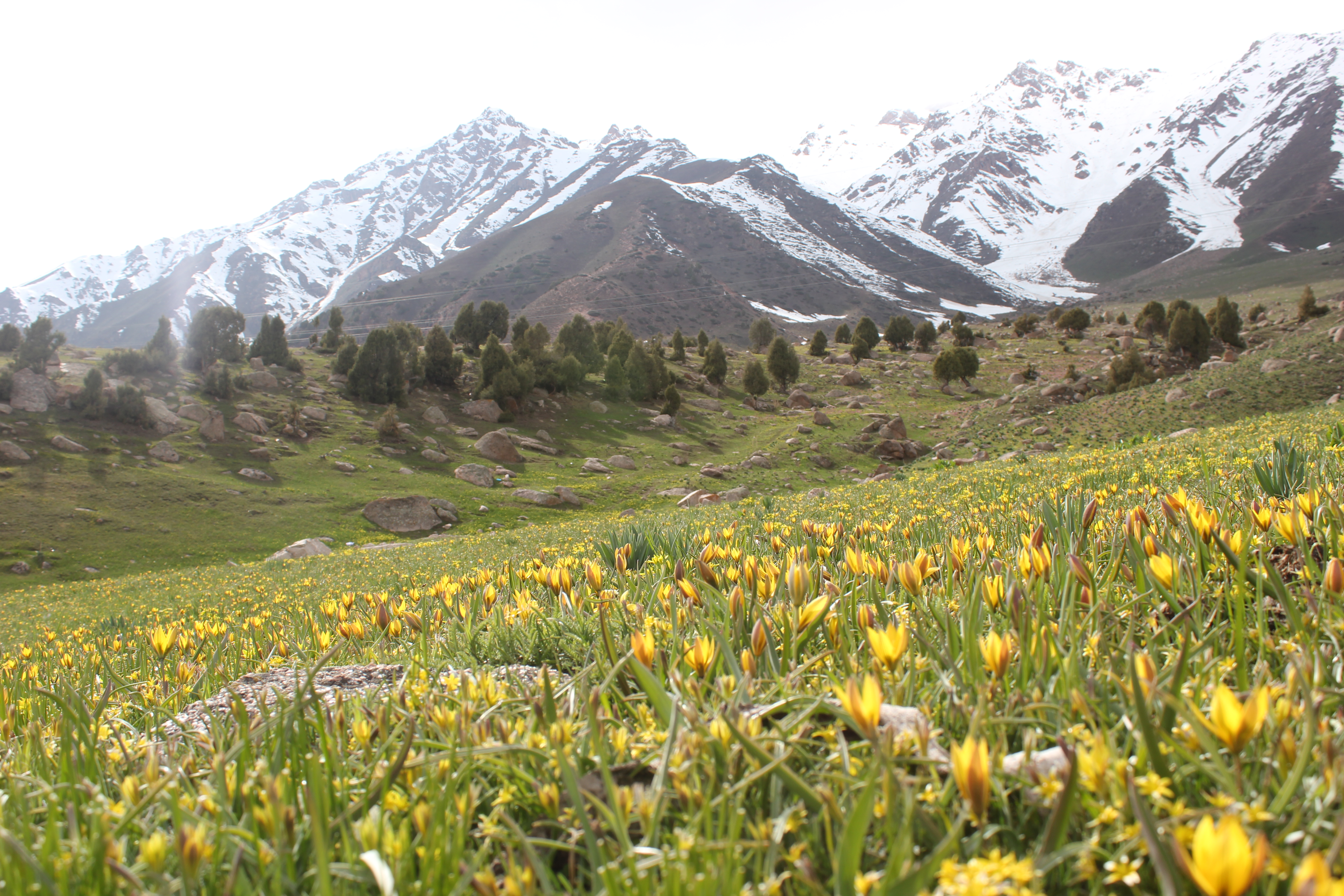
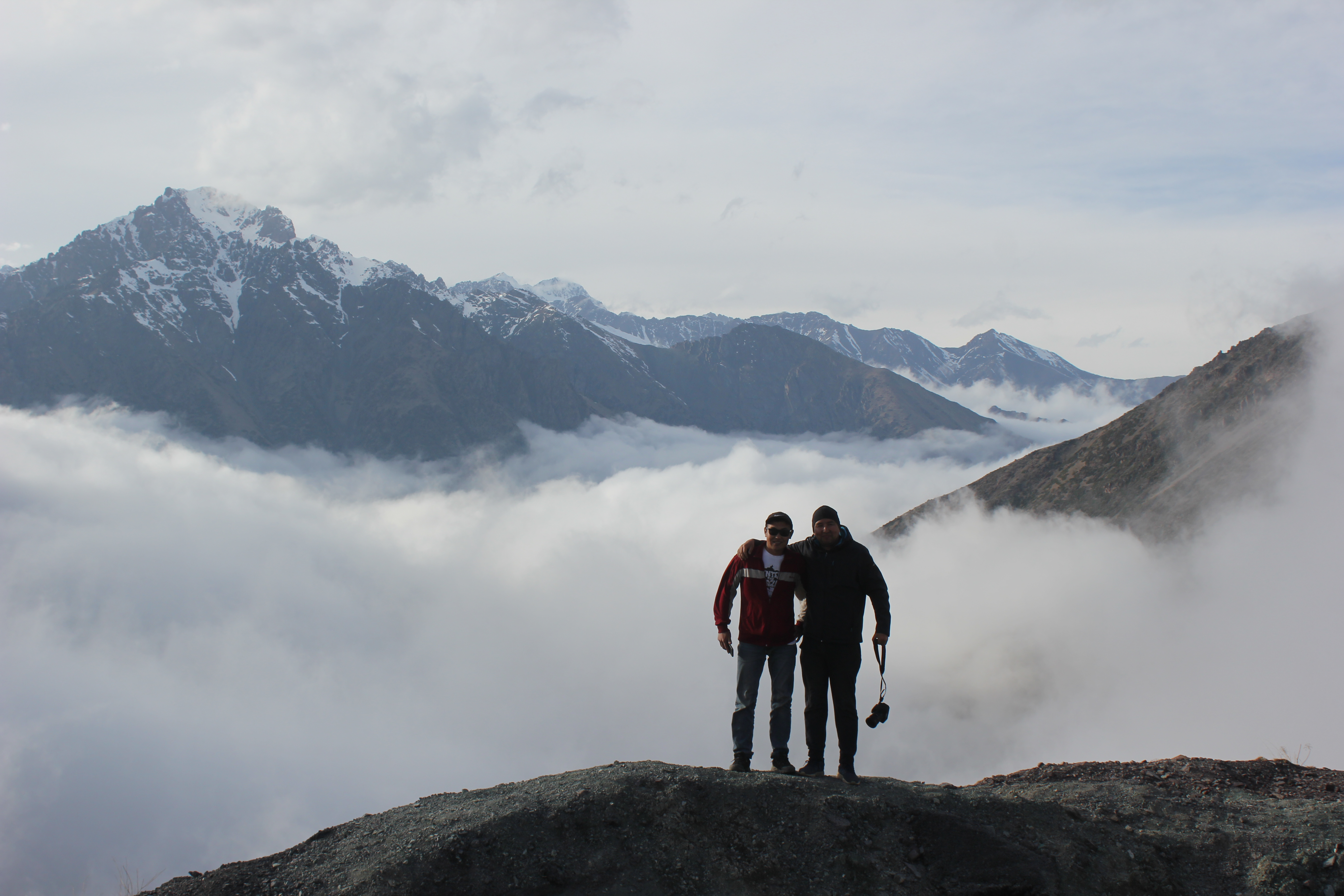
The following morning, we prepared for a hike and our first real adventure off the beaten track. Our host was going to show us where some big red tulips were, but it required climbing hills and heading to the summer pasture areas. The team stepped up to the challenge and were rewarded immediately with some of the little yellow flowered Tulipa dasystemon, fifteen minutes into the hike. A little further on after summiting a challenging hill and descending not so gracefully down the other side towards the valley bottom we found what we were looking for. The grand Tulipa affinis flowering in its majestic red. This species was a truly spectacular sight against the backdrop of snowy peaks that separate Kyrgyzstan from Tajikistan. In fact we were truly lucky to see this wonderful species as it is thought to be Vulnerable and therefore quite rare in Kyrgyzstan. Further to this, this species was not alone and we were lucky to find Tulipa turkestanica and Tulipa rosea growing nearby also. As if this wasn’t enough the director provided us with a special treat showing us a very rare plant in Kyrgyzstan called the aigul that grows in only two or three locations in the whole country. The hike back was difficult with stony slopes and steep paths to overcome, but we all made it back safe and sound to the house where we gratefully tucked into dinner. That evening we undertook our last drive heading west and reached the furthest point away from Bishkek we would be going.
Arriving at another hosts house in a village near Sulutku town at the very tip of south-western Kyrgyzstan we were again warmly welcomed and provided with all the food we could possibly want. We slept well, however woke up to rain and cloudy skies. This dampened the mood a little and we had a slow morning. However, by the afternoon we decided we would brave the rain and head out with a guide to find some nearby tulip populations. Climbing a large hill in the rain was not the glamorous picture that everyone considered when setting out on this expedition, but we did locate more Tulipa turkestanica and Tulipa affinis that had not been recorded on previous expeditions. Fieldwork cannot all be blue skies and stunning views!
The following day we began our long journey home to Bishkek. On this journey we stopped in a few valleys to search for new populations. After a few nights in guesthouses we were delighted to be able to stay with the local Fauna and Flora International manager, Bolot, in the famous Arslanbop region where vast areas of walnut trees grow. He guided and helped us traverse the walnut-fruit forests in search of more tulip populations. Overall the return journey took us four days and late on Saturday night we arrived back in the capital. These four days however were very productive as we found some Tulipa platystemon – another Red Listed species, Tulipa ferganica, Tulipa dasystemon, Tulipa jacquesii, and Tulipa rosea.
The trip was a great success and we located many new populations that had not been recorded before. The team, although tired, were in high spirits on their return to Bishkek and heavily laden with samples to take back to the herbarium and laboratory. In total we had located eleven different species! We managed to visit the South of Kyrgyzstan in time to catch many species flowering. Many of these species are now fruiting and dying back to bulbs as the region heats up as we enter late spring making them impossible to find. We made it just in time! Now let the planning begin for the next expedition to the West!

 IUCN SSC Wild Tulip Specialist Group
That was really interesting Brett. I never knew there were so many different species.
You must be tuliped out if that is a saying.
Fascinating
Well done
LikeLike
I am glad you enjoyed it! There are many, many species that our team still needs to find here in Kyrgyzstan. So we are not at tulip saturation point yet! Great to have your support and all the best.
LikeLike
Hi Brett fascinating reading and interesting that wild tulips can grow in such poor soil and dry conditions. The aigul plant looks like a fritillery? Well done and looking forward to the next instalment.
LikeLike
Hi Brett – A cold wet sunday here – what a great trip you’re having -just going to ask for AIGUL
picture when next click & there it was – such excellent photos of all flowers – keep up the good
work – Best wishes to you & all your party – Gramps W.
LikeLiked by 1 person