In April 2024 the IUCN Species Survival Commission (SSC) approved our application to form a Wild Tulip Specialist Group and last week our group was formally announced to the conservation community through a news piece published by our co-chairs Dr Brett Wilson and Ormon Sultangaziev in the journal Oryx (https://doi.org/10.1017/S0030605324000863). After some months preparing a proposal to highlight how this new group would support tulip conservation efforts and after reaching out to many tulip experts from around the world to join the group we have the result we wanted. But what does this new group mean?

Our new logo in landscape and portrait forms designed by the team at https://ww.knightdesign.co.in (@knightdesignin)
The International Union for the Conservation of Nature or IUCN is made up of member organizations, the secretariat and a range of scientific commissions. It has been active for over 75 years and works in over 160 countries worldwide. Members can be government or civil society organizations, with over 1400 members currently part of IUCN, and they set the direction of the Union’s work. The secretariat and the director general contribute knowledge, convene and carry out capacity building work whilst also providing support to the Members and Commissions. The new tulip group is part of the scientific commission’s family. These commissions bring together experts from around the world to inform IUCN’s knowledge, products and help deliver its mandate. There are seven IUCN commissions with our group sitting within the Species Survival Commission, which aims to improve knowledge and the implementation of species level conservation efforts. The commission has a steering committee which governs the commission and helps manage a range of committees, task forces, and specialist groups.
A specialist group is made of up members deemed to be experts on a specific topic – a group can be focused on a national level or on a specific taxonomic group. Our group specifically focuses on the genus Tulipa and the conservation of the wild ancestors of our much beloved Spring garden flowers. Specialist groups help deliver IUCN’s vision of species conservation, specifically looking to assess the conservations status of species, plan strategies for effective conservation, and to implement conservation action to ensure the survival of species, whilst also building a stronger conservation network and communicating key information to stakeholders. The Wild Tulip Specialist Group (WTSG), as part of its formation, has already created a plan to deliver across each of these areas.

The group is made up of around 35 experts from 14 countries (Albania, Azerbaijan, Denmark, Finland, Iran, Kazakhstan, Kosovo, Kyrgyzstan, the Netherlands, Tajikistan, Türkiye, Turkmenistan, the UK and Uzbekistan), although we are looking to continue to expand the diversity of our members. Notably, many tulips grow in Central Asia so we have a particularly strong contingency of Central Asian members, a region that has historically been poorly represented in other specialist groups. Although our group is young compared to most other existing groups, a lot of our members have already been working on wild tulip conservation for many years. Current estimates from research, much of which has been conducted by our team, suggest there are around 90-100 species of wild tulips and that over 50% of these are threatened with extinction. Therefore there is much work for our members to get involved with to ensure we do not lose any wild tulip species to extinction.
So, why form a group? Well, the formalization of an expert group on tulips should help us to access further funding for conservation activities, empower our members through the recognition of their skills, and form a network to share knowledge to make our conservation efforts more effective. In the last few months we have already been awarded an SSC internal grant which has allowed us to start some work. This first project focuses on assessing three commercially important tulip species through the Green Status of Species assessment process. This will allow us to understand how depleted these species are based on their historical records and explore the impact past, present, and future conservation efforts have, are having, or could have on them. We hope this small piece of initial work will be the first stepping stone to a much broader array of efforts to conserve these beautiful wild flowers. We are grateful to the IUCN SSC for allowing us to join this wonderful community and look forward to helping to ensure our planet’s species are safeguarded.
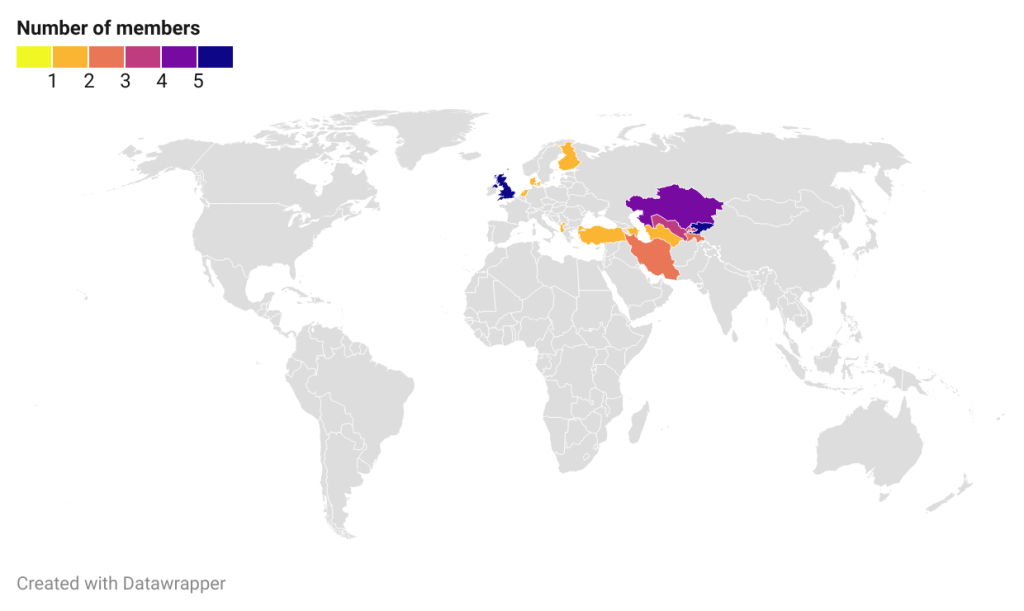

 IUCN SSC Wild Tulip Specialist Group