A long time ago, in a continent far far away… the tulip came into being. This distant land was the beating heart of world trade with nomads, tribes, and explorers treading its historic roads. I am of course talking about Central Asia and the silk road network, a network that enabled trade between the west and east many centuries before ships and planes opened up new routes. It was an area of the world that was once the centre of an empire that stretched across nearly the entirety of Eurasia, but this region is now well away from the spotlight of global news and interest.

However, Central Asian flora could be beginning to turn heads back towards this region once more. The wild tulip diversity in the stan countries (Kyrgyzstan, Kazakhstan, Tajikistan, Turkmenistan, and Afghanistan) is vast compared to anywhere else in the world. Diversity takes a very long time to manifest and so it is hypothesised that the extreme diversity of tulips in Central Asia provides evidence that this is their place of origin.
So it appears that tulips sprung up in the mountains, steppes, and plains of Central Asia. This was the beginning of a long journey for this little plant which would become one of the most well-recognised flowers on the planet. It started with travellers who, passing along the winding, rocky roads, would have seen vast fields of flowering tulips in the spring months. The beauty of these displays in this rugged landscape captured their imagination and tulip trade grew with flowers being carried further west into what was then Persia, and is now Iran and its neighbouring countries.
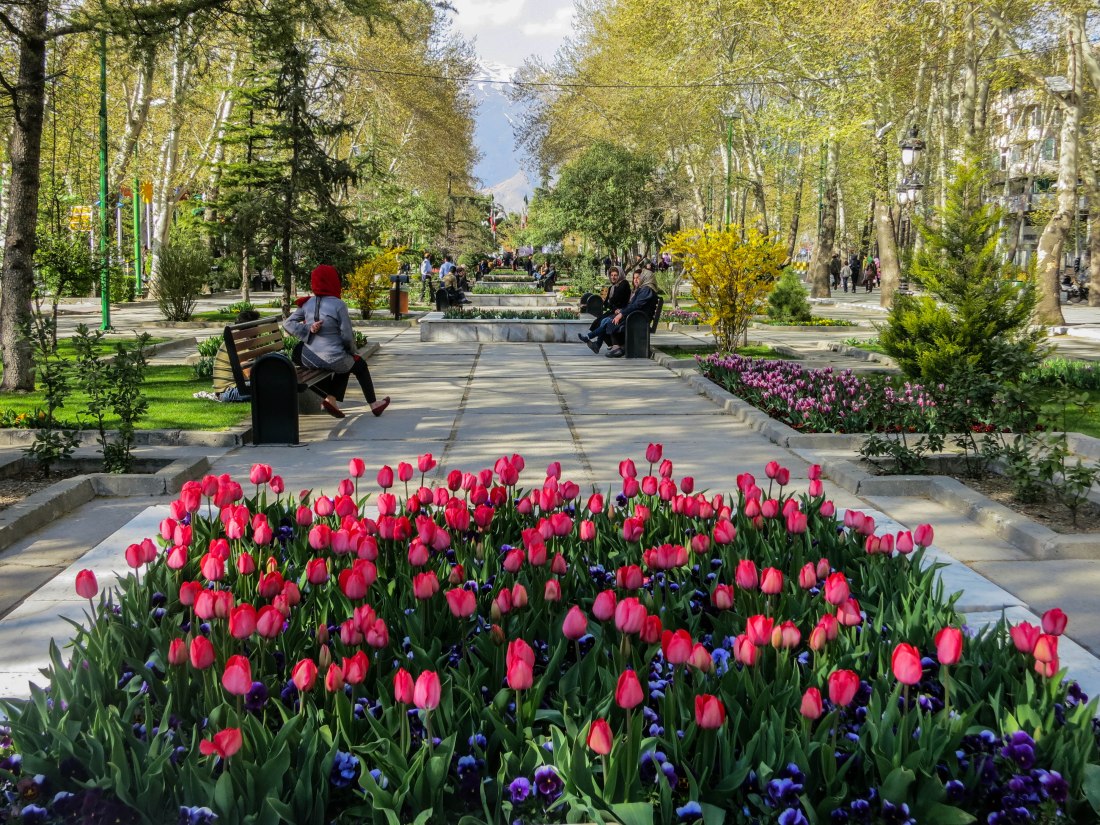
Gardening in Persia and Bactria (Now parts of Afghanistan, Tajikistan, and Uzbekistan) was a commonplace activity and people were always on the lookout for the next big flower. The tulip was one such flower that was recognised and cultivated. These early Islamic gardens became filled with tulips collected in the wild or attained through trading. This led to the movement of species from nomadic lands into bustling metropolises in large kingdoms. Tulips started appearing in literature around the 12th Century long before they were even heard of in Europe. These plants had now been extracted from their wild home and brought into the urban world.
Unfortunately for the populations of the Persian and Bactrian kingdoms, Seljuk tribes from Central Asia invaded and took over vast areas of land. Although the people suffered, tulip species benefitted greatly. These tribes travelled west into Turkey, and with them they brought the Tulip, now a well-travelled plant with many stamps on its passport!
Turkey’s tulip diversity grew dramatically and the flower’s importance in local culture followed this trend. They began to appear on ceramics, textiles, carpets, and began to feature in manuscripts. The ruling Sultans took particular fancy to this fragile, yet beautiful, flower. They were planted in the vast Palace gardens in Constantinople and became the symbol of the ruling family Osman. In the 16th century Tulip trade had grown so much that fixed prices had to be set by the Mayor of Istanbul to keep speculation under control.
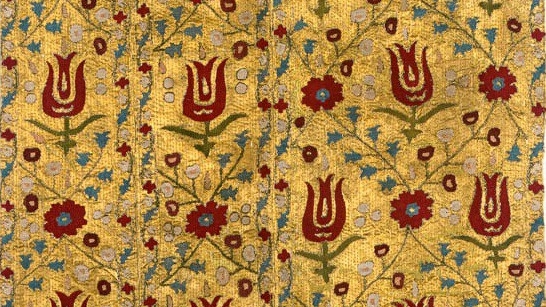
At the time, Constantinople was a bustling trade hub connecting Europe and Asia. People from all over the world passed through this city and it was here that European’s are thought to have first fallen for the Tulip; it was love at first sight! The first tulips brought into Europe for trade were shipped to Antwerp in 1562. However, they were mistaken for onions and roasted over a fire or planted in vegetable gardens where they died. I think cooking back then must have been a lot more experimental!
Eventually, Clusius, the director of the Imperial Court in Vienna, began to create a respectable collection, receiving bulbs through many diplomatic channels. This garden flourished and he was offered, and accepted, the title of Horti Praefectus at the botanic garden at the University of Leiden in the Netherlands. There he started his biggest collection. He distributed his seeds and bulbs to many other European countries and in return received many rare specimens which made his collection unique. Although, he did not allow the public to buy anything from his collection leading to multiple events of theft. His work strengthened an already growing trade in the Netherlands and across Europe as a whole.

This trade went from strength to strength as new breeds with crazy colours and oddly shaped flowers became popular. The growing middle class in Europe saw tulips as a symbol of wealth leading to an increasing market. The craze for bulbs started in the 17th century in France before slowly shifting to the Netherlands. Tulip mania ensued with rare flowers being traded for vast sums and even, in some cases, entire properties. This market reached its height in 1636, before it collapsed three years later.
However, the tulip trade still remains a billion-euro industry to this day with over 6000 registered cultivars. These flowers have come a long way from the barren environment of Central Asia to the lush green gardens of Europe. Their story is intertwined with that of human trade and movement, and they are now grown globally ensuring they are available all year. The Netherlands remains the home of cultivated tulips where they area a symbol of national pride. But it is the original diversity in Central Asia that gave rise to this globally recognised and admired flower. It is to this area of the world we return our attention. The next time you see a tulip just remember the incredible journey it has been on and that there is people ensuring that this story isn’t over yet…
The information for this blog was based upon the more comprehnsive overview of tulip history found in
Christenhusz, M.J.M., Govaerts, R., David, J.C., Hall, T., Borland, K., Roberts, P.S., et al. (2013) Tiptoe through the tulips – cultural history, molecular phylogenetics and classification of Tulipa (Liliaceae). Botanical Journal of the Linnean Society, 172, 280–328.
I would highly recommend anybody who would like more information on tulip history to go check this paper out.

 IUCN SSC Wild Tulip Specialist Group